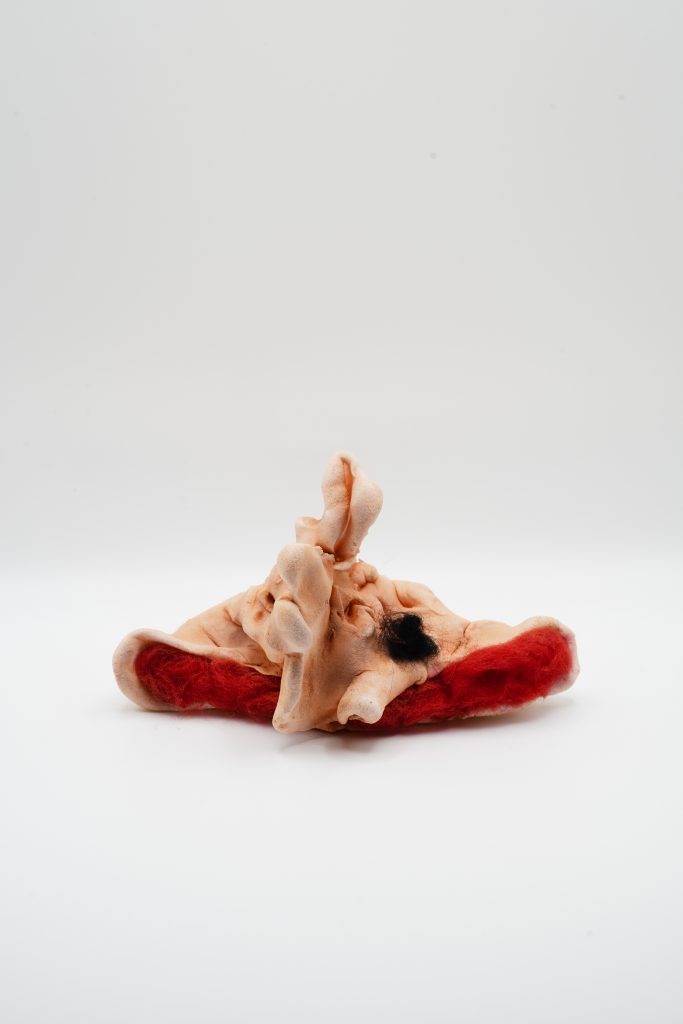
1.HEALTH ALTAR (2nd. Scene), 2022
The altar is a site of meaning concentration and spiritual appeal… Meaningful scenes of health restoration are constructed in altar-like spaces through specific three-dimensional objects——P.2
I think that transforming family shrines/temples into immersive memory altars is a great way to do this. An interactive altar could be created in a follow-up exhibit.
How-to in the article: Recitation of the Palestinian poet Mahmoud Darwish’s “State of Siege” in the Saharan refugee camps. Minimalist Wooden Bench + LED Lamps for Reading Space → Creating Sacredness with Low Costs.
Original article : Language is the repressed unconscious of images… Words appear on the surface of artworks in order to make the image ‘speak’. Edward Said: “Intellectuals must speak out on behalf of the forgotten and speak truth to power”.
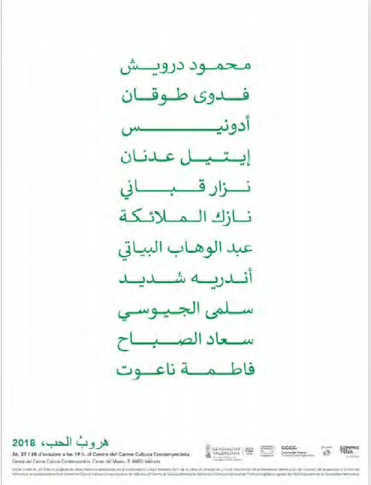
I think it is important to collect objects of resistance from discrete family events (e.g., migration/cultural revolution) as well as essays and poems about trauma, and have them merge with old family objects or artifacts. This could be: text, image, sound. Allow the overall immersion to carry on highlighting and reduce the audience’s passive approach to learning knowledge. At the same time, the old objects are composed into a minimalist scene so that the audience can feel the atmosphere of the ‘home’ scene and enhance the immersion.
2.Socially-engaged practices in public space in non-Western countries
link:Socially-engaged practices in public space in non-Western countries :: ioanniskarounis
Socially-engaged art in public space is any art form which involves debate, collaboration and social interaction with people and communities in public space settings. With “collective” and “participation” as its main components, socially-engaged art employs a variety of means and practices based on creative communicative action, which is central to democracy and social dialogue, to optimize the power of art for social criticism, effect community rebuilding and catalyze civic participation and inclusion (Cartiere & Zebracki, 2016).
In the aftermath of World War II, there have been continuous efforts undertaken by artists, architects, independent organizations, sociologists, academics, scientists and other actors to enhance civic creative engagement, which served the idea of what was later called “micro-politics”. (Campbell, B. 2015). Artists, in particular, began to employ socially-engaged practices trying to build a world of understanding without borders and wars. They addressed the new complex social and political challenges faced by a number of communities in western societies through the understanding and acceptance of resistance to subjugation, diversity, and the recognition of the need for participatory artistic practice and social practice art.
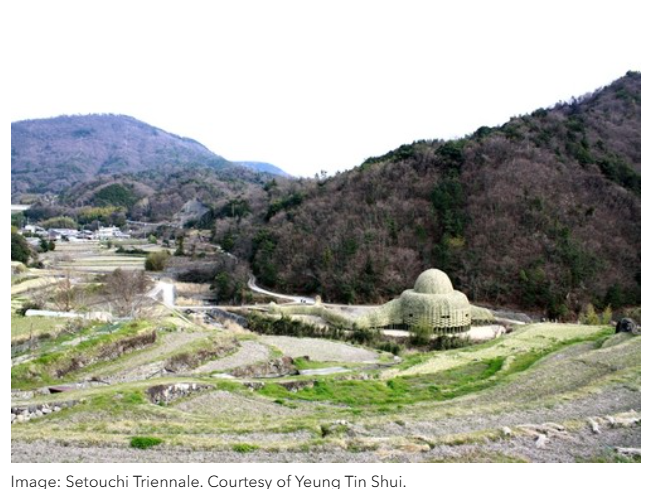
In recent years, Japan’s Echigo-Tsumari Art Triennial has generated a fair amount of buzz, both within art circles and beyond. The triennial, held every three years since 2000, presented over 335 works last year. The purpose of the event is to revitalise regions in neighbourhoods close to the exhibition site—such as Tōkamachi and Tsunan in Niigata Prefecture—and tackle issues plaguing these areas, like an aging population and low birth rates.
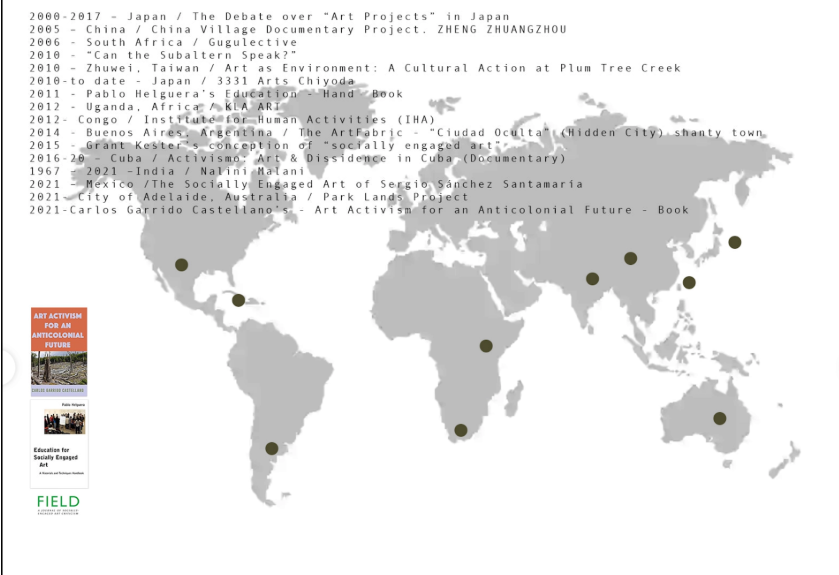
A.Yeung Tin Shui (2000-2017), “Is It Socially Engaged Art?: The Debate over ‘Art Projects’ in Japan,” Asia Art Archive,
https://aaa.org.hk/en/ideas/ideas/is-it-socially-engaged-art-the-debate-over-art-projects-in-japan
There’s another perspective from which we can trace the origins of art projects in Japan—one that takes into context local discourse and history.
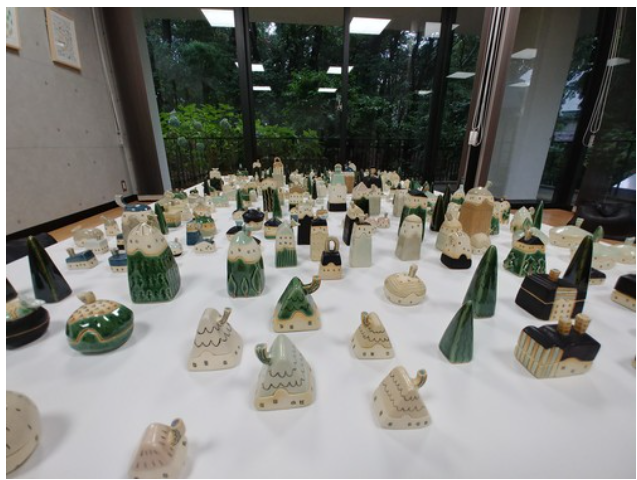
This paper examines the Japanese artist’s act of placing his work in a social place, essentially combining the social environment with the artwork, and my work entails condensing the social environment into the artwork.
B.2005 – China / China Village Documentary Project. ZHENG ZHUANGZHOU
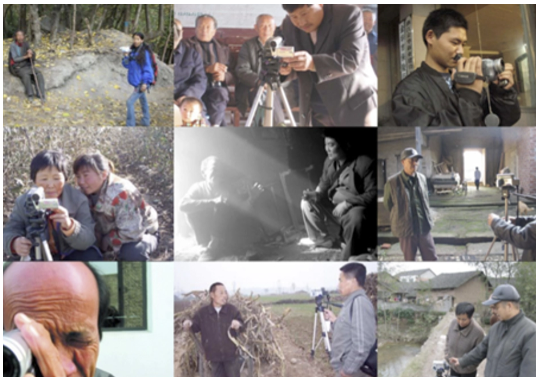
https://arthubasia.org/project/situating-socially-engaged-art-in-china-by-zheng-zhuangzhou
In 2005, documentary filmmaker Wu Wenguang initiated the China Village Documentary Project. When the EU-China Training Program on Village Governance asked him to produce a documentary on village self-governance in rural China, he made a counter proposal: rather than making the film himself, he would help farmers to document village politics themselves. He placed an advertisement on Southern Weekend, a popular newspaper, calling for proposals. He selected ten submissions, invited the farmers to his studio in Beijing, trained them for a week, and gave each person a low-end DV. These ten farmers came from nine different provinces, their ages ranging from 24 to 59. They went back to their villages and captured elections, discussions, disputes, and everyday life. They then went back to Beijing and Wu Wenguang’s team helped them to edit the footages into ten short videos, each lasting for ten minutes.
The form of the image is very similar to a record of a qualitative investigation, a form that is somewhere between faithful recording and subjective design. I believe that for family narratives: 1. the importance of the image is to explain the reasons and processes behind the artwork; and 2. to show the same history from another perspective.
C.2015 – Grant Kester’s conception of “socially engaged art”
Calls for a new kind of criticism and theory that engages in “field research,” crossing established boundaries between art, activism, urbanism, and anthropology. As he states, “Throughout this field of practice we see a persistent engagement with sites of resistance and activism, and a desire to move beyond existing definition of both art and the political.”
https://field-journal.com/issue-1
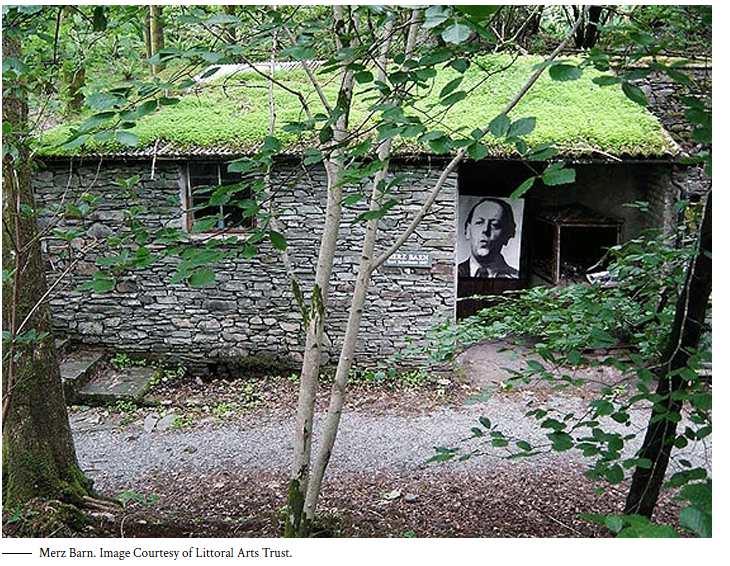
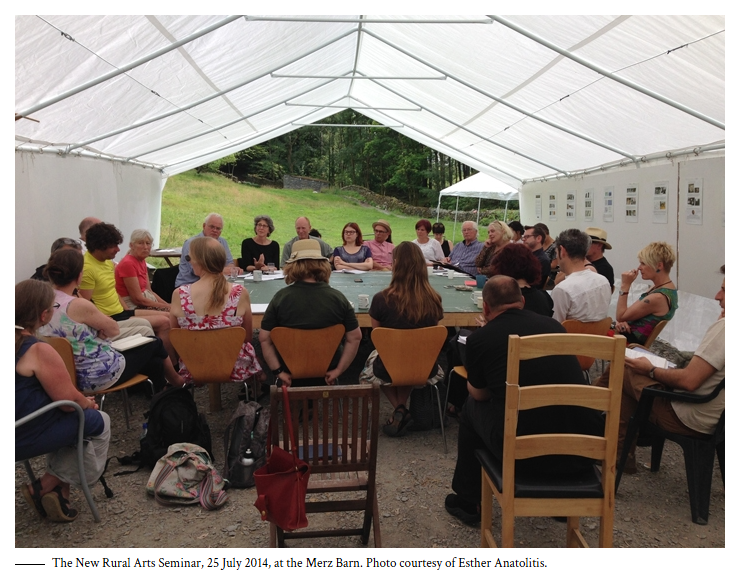
This organization’s act is similar to the model of ‘social design’ through workshops, performance, and offline art combined with an emphasis on ‘fieldwork’, an act of ethnographic documentation by means of art. Unlike the Seto Inland Sea Art Exhibition, such an act is more closed and private, targeting specific communities for transformation and research. The Seto Inland Sea Art Exhibition, on the other hand, emphasizes how Japan’s localized culture and art are integrated into the social environment. For me, ethnographic documentation by means of workshops and art exhibitions is what I need. I can continue to integrate into my family group to investigate the needs and grievances of different age groups. From there, I can discover what form the narrative about family ethnography should take.
3.Description:Participatory Arts
Participatory Arts – Participedia
Participatory arts are forms of artistic expression which enable shared ownership of decision-making processes and often aim to generate dialogue, social activism, and community mobilization. Thus, these arts offer a new medium for political participation.
Participatory arts are forms of artistic expression – through media such as drama, music, writing, video, and photography – that stress shared ownership of the decision-making process and that are often aimed at non-arts agendas, such as generating dialogue, social activism, or mobilizing communities towards a common goal.
This engagement occurs along three main dimensions: (1) production, or the actual “making” of art; (2) decision-making, which determines what type of art is produced, and by and for whom; and (3) consumption.
While some participatory art projects focus on engaging the general public in political issues or campaigns, other efforts offer participatory art programs to reach underserved populations such as immigrants and at-risk youth, while others focus on activities that will increase the overall vibrancy and connectivity of local communities.
It opened my eyes to the fact that in addition to the art show and artwork approach, doing group activities and behaviors seemed like a good way to go.
For me, how I evoke instincts and emotions is of utmost importance. This is because the physical and psychological touch can raise one’s attention to the highest level, when the viewer gradually recognizes the creator’s intention and thinks about his or her own situation. This creates a connection with ‘home’.
4.Digital common(s): the role of digital gamification in participatory design for the planning of high-density housing estates
“Digital Commons” explores the intersection between participatory design, digital gamification, and community engagement, contextualised in the planning of high-density housing estates in Hong Kong. The research project investigates how digital gamified participatory design can be applied in decision-making processes for the planning of public facilities in high-density
housing estates. Focusing on community engagement methods, the project
has engaged with residents of a case study housing estate, Jat Min Chuen in the Shatin Waiarea of HongKong, tofacilitate collective planning discussions about the past, present, and future of community facilities. Using a digital community game approach, it has collected opinions and needs from public housing residents, promoted collaborative design thinking processes, and provided a platform for participants to increase their understanding of the complexity of planning problems through 3D visualisation tools. The experiences documented in this study demonstrate how 3D interactivity, real-time engagement, and bottom-up perspectives may enhance the potential of using immersive digital twins during collective decision-making. The gaming outcomes show a high similarity across all teams in close relationship to users’ daily life routines, demonstrating a new powerful role for urban designers as a coordinator of interactive and collaborative planning processes.
“Digital commons” is an emerging notion generally invoked to counter the“dominant narratives of normalising control through the datafication of cities” (De Lange, 2019). It involves the production, distribution, common stewardship and ownership of data, information, and technology that are valuable resources in collective decision-making (Bauwens et al., 2019).
• How can co-creation processes be designed and organised to deliver satisfactory outcomes for individual participants and the community?
• How can gamified participatory design processes be set up to improve participants’ understanding of their community and the difficulty of the design problem?
• What is the added value of immersive technology for participatory design and intergenerational community engagement, and how may it be best utilised for the planning of housing?
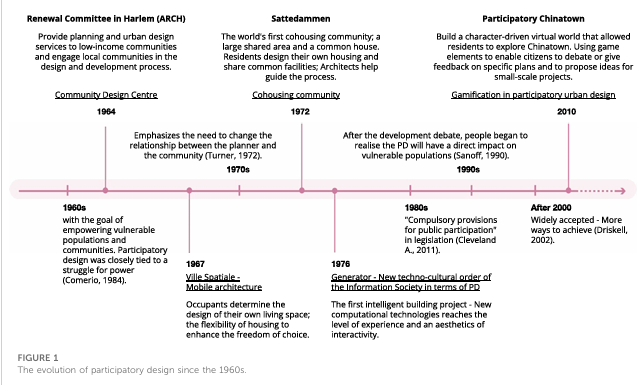
Studies have shown that the use of the internet as a platform to facilitate online collaboration may address the limitations of coverage, duration and engagement caused by traditional face-to-face workshops and exhibitions.
1) Operational goals—instructions on how to win the game;
2) Constitutional or foundational rules—to ensure the smooth running of the game;
3) Implicit or behavioural rules—managing the behaviour of players;
4) Instructional rules—the ability of players to learn through games.
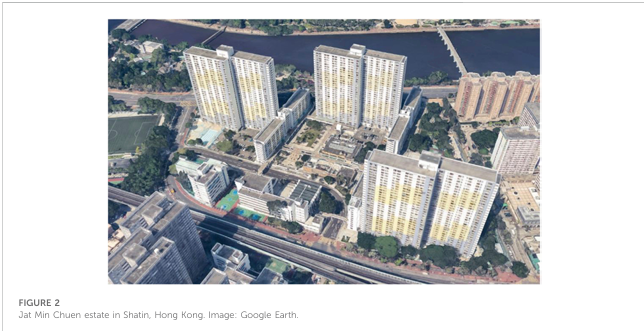
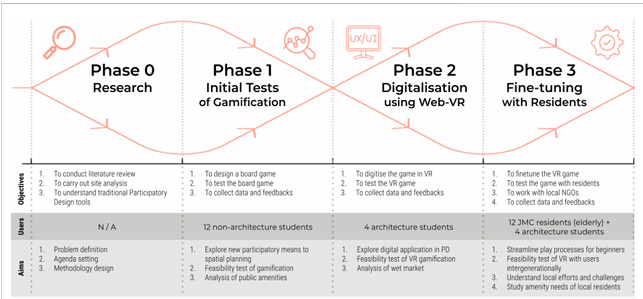
In line with our project objective to explore the use of gamification in participatory design, we used JMC Estate as a case study location for a speculative public space and shared facilities upgrade project, parallel to the revitalisation project planned in practice. To engage with the estate community, we developed interactive games to be played by residents, exploring how the gameplay could expose their opinions, needs, and visions of public amenities in a fun and informative manner.
After these stages of testing, we consolidated feedback from residents and non-profit organisations working in the area, to evaluate how to further improve the game processes to increase their scale and scope of application. The evaluation method consisted of 1) questionnaire pre- and post-gameplay, 2) documentation of gaming outcomes, and 3) a post-game group discussion
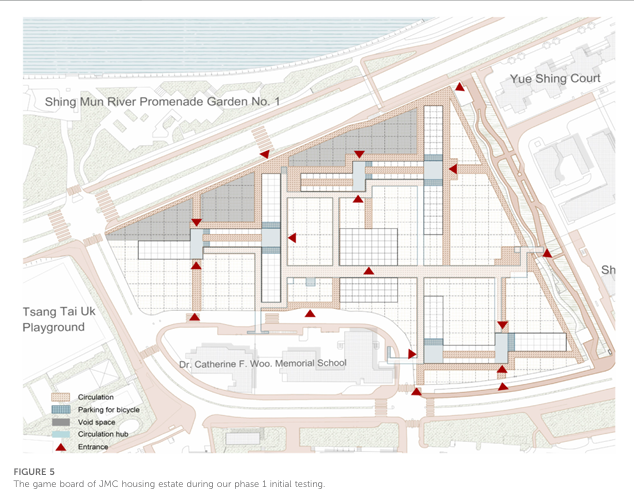
The goal of the game was for players to work in teams of four and complete the design of the wet market area within the time limit, by deciding together what shops are needed.
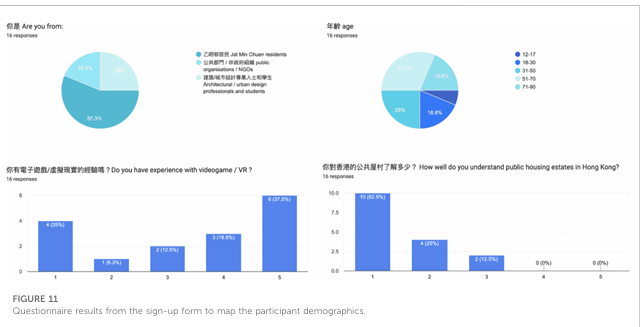
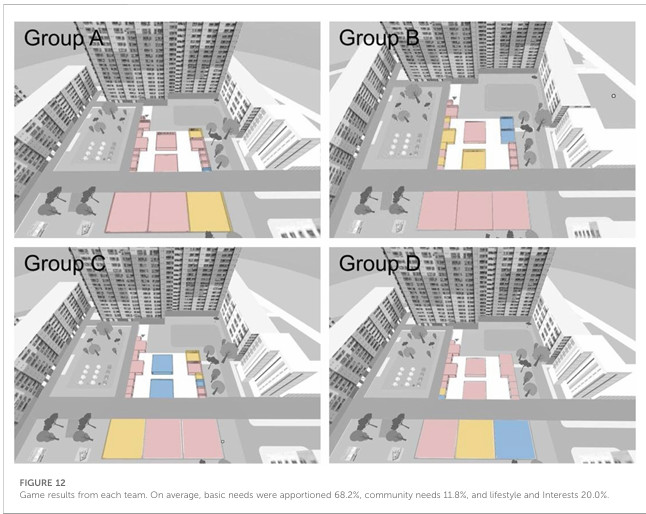
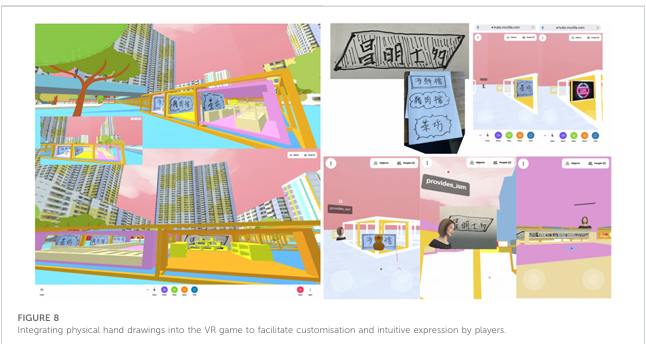
The game had been designed to be played in three rounds to promote and analyse different forms of collaborations. The first round was run without any pre-set rules.The second round was played with roleplaying, where each player would pick one of the roles: Youth青少年, older adult長者, Architect建築師,HKHS房屋協會. The last round was a scenario game, where each team should decide on the proportion of shops according to different demographic combinations. A list of 12 design goals that references HKHS (2021b) missions were provided to help players plan their design agenda as a team.
After evaluating the questionnaire results and game outcomes, we find that the participatory design experiments have produced an overall increase in players’ understanding of their community and the complexity of the design problem.
This example of how to use games for community design provides a conduit for different people in the community to communicate, share and voice their claims.
5.Ethnography in Participatory Design
“Ethnomethodology describes what people do in observed details … not representative of something else.” (Page 5)
“designing perfect technological solutions to the wrong set of work problems” (Page 1)
“ethnography … insists that rigorous attention be paid to the social organisation of current practice” (Page 1)
“exclusion of users limits requirements formulation” (Page 5)
Ethnography advocates “non-interventionist” observation, but design is essentially a transformative activity. The authors point out that understanding practice is not the same as refusing to intervene, but rather provides a basis for change (pages 5-6).
“to understand a language-game is to understand a distinct organisation of work” (Page 7)
Do not predetermine the direction of the narrative (e.g., forcing a “reconciliation” of the conflict).
Do not speak for the family (e.g., the researcher interprets the meaning of the artwork for himself).
Leave a Reply