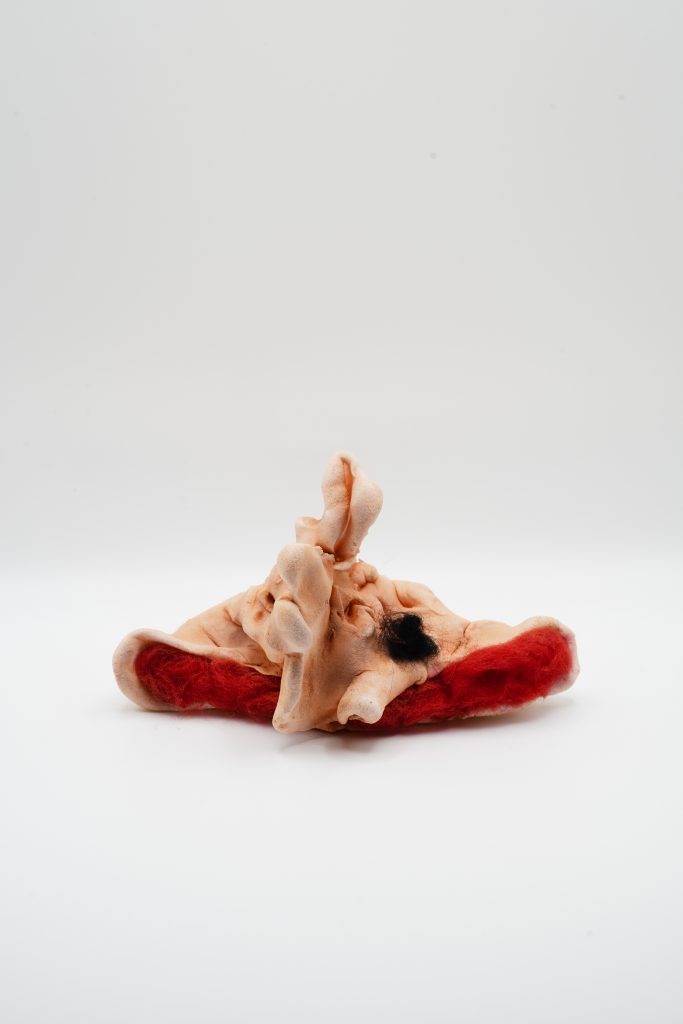
This was the first piece I wanted to make, a piece where I wanted to present family history as archaeology. This will be able to show the connection between the individual and the family in a time dimensional way.
I have divided the whole work into five layers, corresponding to five generations in China: the Republic of China period, the New China period, the Cultural Revolution period, the Reform and Opening-up period, and the modern era.
For the Chinese, these five periods were full of change and emotions (good or bad). And families can’t get around these five periods, which must be filled with stories of departures and returns. I would like to encapsulate each of these five periods in acrylic panels, with the past underneath and the modern on the surface, and exhibit them as fossils. When viewers look at the objects of different generations through the transparent acrylic panels, there must be something unchanging among them, which is the family inheritance. At this point, the viewer will also reflect: what is my family like? This side of the exhibition will inspire them to explore their own family stories in a reflexive manner.
1.Republic of China period(1912-1949):Migration and Roots in the Midst of War
a.Bloodstained refugee identity cards. In those days, Chinese were required to have a variety of identifications geared toward the government, the Japanese, local forces, etc.
b.Genealogy of the time
c.Jewelry and antique books(Symbolizing family identity and status)
d.Religious objects and the remains of old houses (in those days, beliefs were confused)
2.New China Period (1949-1966): Idealism and Collective Branding
a. Collective certification or traces of collective production;
b.Household items from the New China period;
c.Items related to Mao Zedong (photos, books, etc.);
d. Items related to the literacy campaign
3.The Cultural Revolution Period (1966-1976): Hidden Resistance and Self-Dissolution
a. Old photographs;
b.Books of many social tendencies;
c. armbands.
d. laundry detergent factory stamps;
e. Tickets.
4.The Reform and Opening-up Period (1978-2000): Economic Emancipation and Ethical Reconstruction
a. Brand new clothing;
b.Foreign language textbooks;
c.Various contracts;
d. European and American products such as cassettes and headphones.
5.Modern (2000-present): digitalization and existential solitude
a. Technology products such as cell phones;
b.Various medications and lab tests;
c. Transcripts and airplane tickets;
A hydraulic press was utilized to compress all the items in layers, making the whole similar to a large fossil, but the requirement was to keep the whole viewable so that the viewer could see what the contents were.
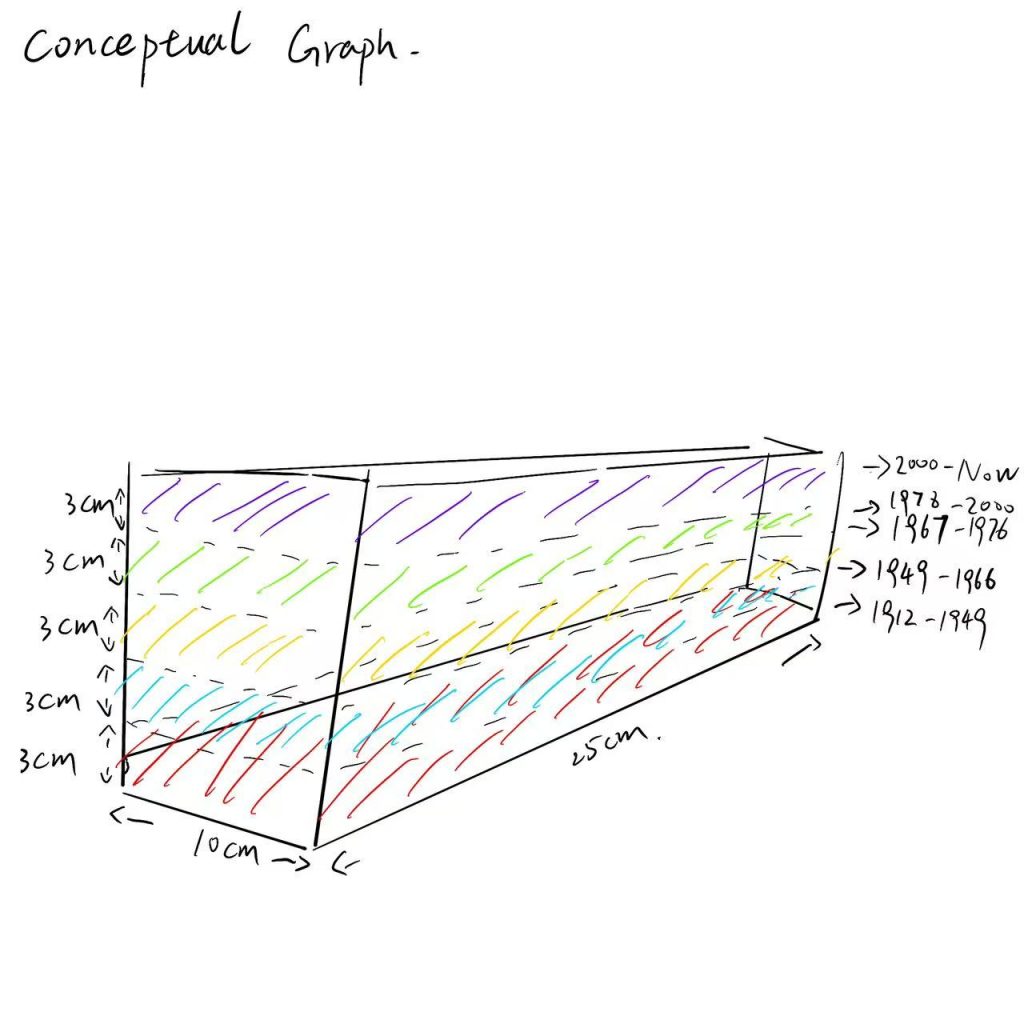
Each layer as a ‘rock layer’ has a different set of items; the Republic of China is soil and ancient book remnants, New China is broken bricks and grain, the Cultural Revolution is laundry detergent and red silk thread, the Reform and Opening Up is flyers and stationery, and the modern era is all kinds of transportation tickets and all kinds of data cables.
Leave a Reply