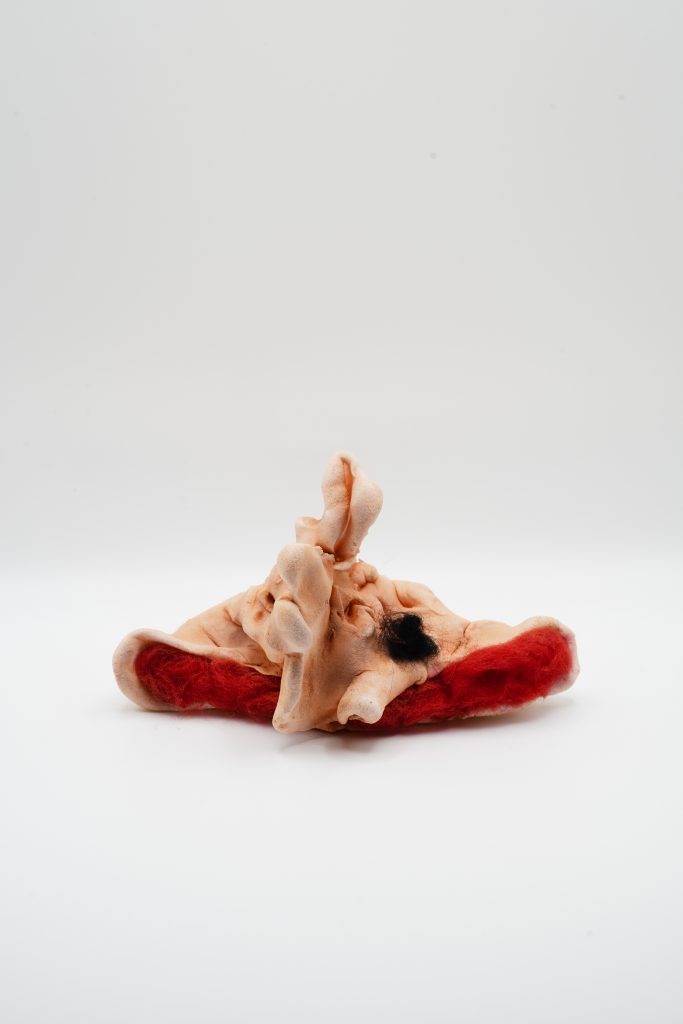
The need for digital entities: Daniel Miller’s material culture research starts from consumption, and regards mass consumption as a creation belonging to the lower levels of human behaviour, the main way for contemporary people to create their own exclusive private life, with the positivity and creativity to resist the vertical of the mainstream ideology; Consumption is not necessarily beneficial, but it should not be regarded as inferior; The first thing material culture research has to do is to take care of mundane objects. Without setting any standards, focusing on neglected objects; Miller’s methodology and thrust of material culture research is to look at the intimate and constructive relationship between people and objects from the daily lives of small groups or individuals. The first thing to do in material culture research is to set no standards, focus on ordinary things, focus on neglected things, and give up the classification research which is based on the main body of people; the methodology and main theme of Miller’s material culture research is to examine the intimate and constructive relationship between people and things from the daily life of a small group of people or individuals.
I need to consider what physical translations into numbers can carry family emotions. Genealogy? Sacred places of worship? Or family modalities? These entities might even be some commodities. To do this, I need to conduct field research, using my family as a starting point, to analyse what objects inspire emotion.
Collective memory and family heritage: cultural memory: when raised to the level of values and purposes, memories related to self-affirmation, identity and transmission of meaning are categorised as cultural memories and, at the same time, cultural memories are more or less related to the three dimensions of memory mentioned above. Memory is governed by social factors (by ‘frames’). In addition, Habwa places special emphasis on social frames of reference and argues that without such social frames of reference, individual memories cannot be formed and preserved. Moreover, when talking about collective memory, it is important to refer to individual memory. While it is the individual who ‘owns’ memory, the collective does not ‘own’ memory, but it determines the memories of its members, and even the most personal memories come from communication and interaction within the social group. The introduction of ‘frames’ is a rational explanation of memory and forgetting. The ‘frame’ tells what is important and what is worth remembering and remembering, the ‘frame’ is the present, what is forgotten does not apply to the present ‘frame’, and what is recalled is in the context of the ‘frame’. ‘What is forgotten does not apply to the present frame, and what is remembered is what can be reconstructed as the past with reference to the frame. ‘Frames change, and so does cultural memory.
Collective memory is subdivided into cultural and interactional memory:
Cultural memory requires continuity over a continuous range of time and space. It requires that something specific be specifically remembered within a particular time and space. At the same time, it requires that a particular group of people collectively identify with that memory and develop certain emotions. Examples include the sense of honour associated with medieval family crests, and the emotions of war aversion and sadness associated with the nuclear bombing of Hiroshima. However, these memories are not fully preserved, but are altered by the habits of the individual narrator, thus transforming the collective memory from an intention (an event, an object, a word, or a concept) into a collective consciousness that generates emotions in the group psyche. This is analogous to the development of emoji culture on the Internet, where a meaningless emoji takes on meaning because of its dissemination.
Interactive Memory: ‘This is the reminiscence of the recently deceased past. This is when people share memories with their contemporaries, typically exemplified by intergenerational memory. This memory emerges collectively in the evolution of history, it appears and disappears over time, or more precisely: it appears and disappears with its bearers. When those who realise it die, it gives way to a new memory. Interactive memory is simple, relying on memories constructed from personal safeguards and interactive experiences, and can last for three to four generations. According to Assmann, 80 years is a boundary value, half of which, 40 years, seems to imply an important threshold. After 40 years, for example, the person who first experienced it will be old or dying, and what was once a vivid memory will gradually lose its colour and will either be recorded and continued or taken to the grave by the person who experienced it.
How to perpetuate collective memory:
Ritual: The repetition of rituals, mainly formal, such as the Passover Seder, which Jews celebrate in exactly the same form year after year. Assmann depicts the link between repetition and remembrance, ‘Jews chewed particularly bitter plants with the aim of recalling their suffering as cattle and horses under Pharaoh; the crushed apples and walnuts churned up prompted the Jews to recall the clay from which their Jewish ancestors had once made the adobes with which they had built their Egyptian towns. Thus, while rituals are designed to present the past and the myths that underlie it, repetition brings the myths to life, shaping the identities of the participants and giving them all identity. Ritual brings meaning to life.
Texts: texts themselves have no transmission effect. It is the transmission, interpretation and elaboration of the text that gives current significance to the meaning it carries. As mentioned above, the choice of texts is specific and they come from an early writing culture known as the ‘stream of tradition’. In the ‘stream of tradition’ there were practical texts for everyday communication, which were normative and stereotypical. Texts were discarded, expanded, abridged, altered and compiled into different collections, which were gradually divided into primary and secondary types, with texts of significance regarded as core texts, often copied and recited. Eventually, it became the canon, or kanon, which had a normative and stereotypical meaning. At the same time, certain specific institutions regulated the transcription, dissemination, and preservation of collections of documents, which made the normative and stereotypical meanings as evergreen as yesterday. Slowly, places such as the clay tablet ‘libraries’ of Mesopotamia and the ‘house of life’ (i.e., libraries) of Egypt emerged to provide a basis for the transmission of cultural memory.
The fundamental difference is that ritual consistency is based on repetition and precludes change, whereas textual consistency allows for change and even implicitly encourages it.
How to mediate:
Refer to Stig Hjarvard’s book Mediatisation of Culture and Society.
How to conduct testimony or preliminary investigations:
Record collective family behaviours, such as rituals and dinners. And compare them with online rituals, exchanges and other behaviours. Focus on analysing the difference in terms of emotion.
Watch out for family members shopping, chatting, etc. on digital platforms and note which behaviours are part of those performed for collective memory or family culture.
2.Oral family journal records, visit and photograph family members of different generations to understand their perceptions of the family’s collective memory.
First phase of the programme:
Shooting and technical synthesis of a documentary film on family culture, approximately 10 minutes long. It contains: the views of different generations of family members on the family, a record of the collective behaviour of the family and the concept of the digital pantheon.
Reference List:
Assmann, Aleida, and Linda Shortt. Memory and Political Change. New York, Palgrave Macmillan, 2012.
何必. “海滩上的贝壳–《回忆空间》阿莱达·阿斯曼.” 知乎, 知乎, 13 Oct. 2023, zhuanlan.zhihu.com/p/595334569.
Miller, Daniel. Consumption : Critical Concepts in the Social Sciences. Vol. 4, Objects, Subjects and Mediations in Consumption. London ; New York, Routledge, 2008.
Stig Hjarvard. The Mediatization of Culture and Society. Oxon, Routledge, 2013.
Leave a Reply