
The most popular way of interactivity and entertainment, in my opinion, is video games.
Games, as the ninth art, have a fusion of all the arts of graphics, sound, and text, along with a great sense of interactivity and exploration. Players are able to have an almost perfect immersion in the experience, which allows them to experience it with a minimum of boredom while still understanding the creator’s intent. The degree of communication and experience in the areas of culture, identity, and memory is stronger than traditional methods such as books and oral narratives.
My format of choice: AVG (Adventure Game). This is a text-based form of gameplay where the player has room to explore but still follows the script created by the creator to explore the story. The advantage of this format over traditional film and literature is the ability to break up long texts or long plots, allowing the player to gradually experience and delve deeper into the plot in order to achieve emotional resonance. This better allows them to recall their memories with their family and better maintain or build an identity with the family.
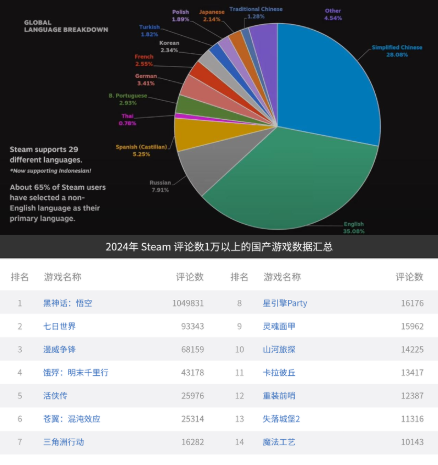
Combined with the 2024 Steam data report, Chinese games occupy about 30% of the market. Platinum level sales game has “Black Myth: Wukong”, gold level has “Eternal Hijacking Infernal”, although the proportion is not large, but still proves that Chinese culture related games are market recognition.
The review of the same ancient Chinese style AVG game Hungry: A Thousand Miles in the End of Ming Dynasty ranked fourth, AVG+RPG Legend of the Living Warrior ranked fifth, and AVG+Declassification game Mountain River Traveling Explorer ranked tenth. It proves that AVG games are hot in the current Chinese market.
“Playability” + “cultural context” is the way to achieve high sales for Chinese indie games nowadays, because it is based on players being able to immerse themselves in the characters and the culture, and thus being able to understand the creator’s intention well.
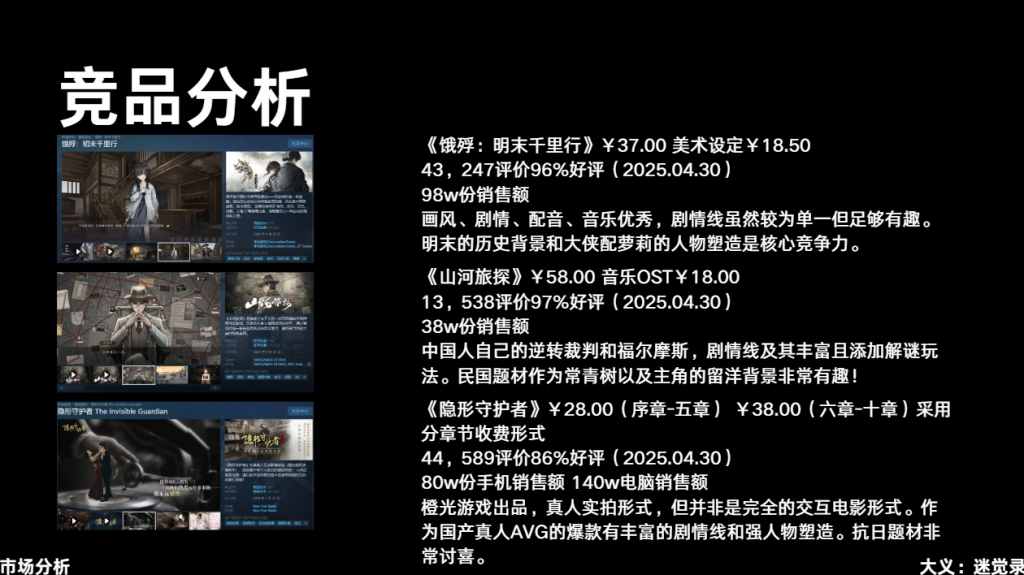

The above six are the very best visual novel games in the Chinese indie game market in recent years. What they all have in common is that they have chosen a history, culture or story that Chinese people know but are not quite sure about. For example: detectives in the modern China period, the combination of Minnan culture and horror, and the story of cannibalism at the end of the Ming Dynasty. The richness of the historical material is coupled with the right amount of creativity, which allows the player to quickly understand the backstory, but still be captivated by the innovative plot.
The story of family history is also part of this genre, which entails selecting generations that the player knows about or is interested in, such as: the end of dynasties, chaotic times, war years that are full of uncertainty. As well as adding the warmth, pain, and memories of family narratives. This can go a long way in capturing the player’s attention.
Leave a Reply