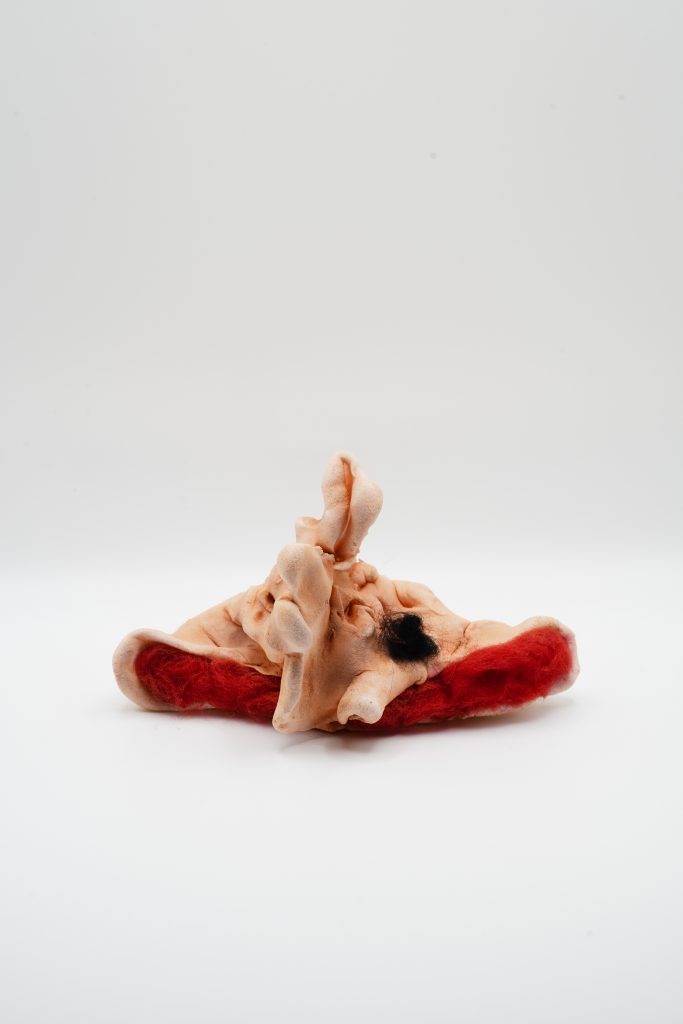
1.1. Outlined
The first intervention was carried out by asking about 35 participants of different ages to discuss a picture with 32 visual symbols, asking them to choose which ones came from the same family and to elaborate on their reasons. to analyse the identification of family symbols among different age groups in contemporary China and to try to identify a collective identity.
1.2. Presentation of works
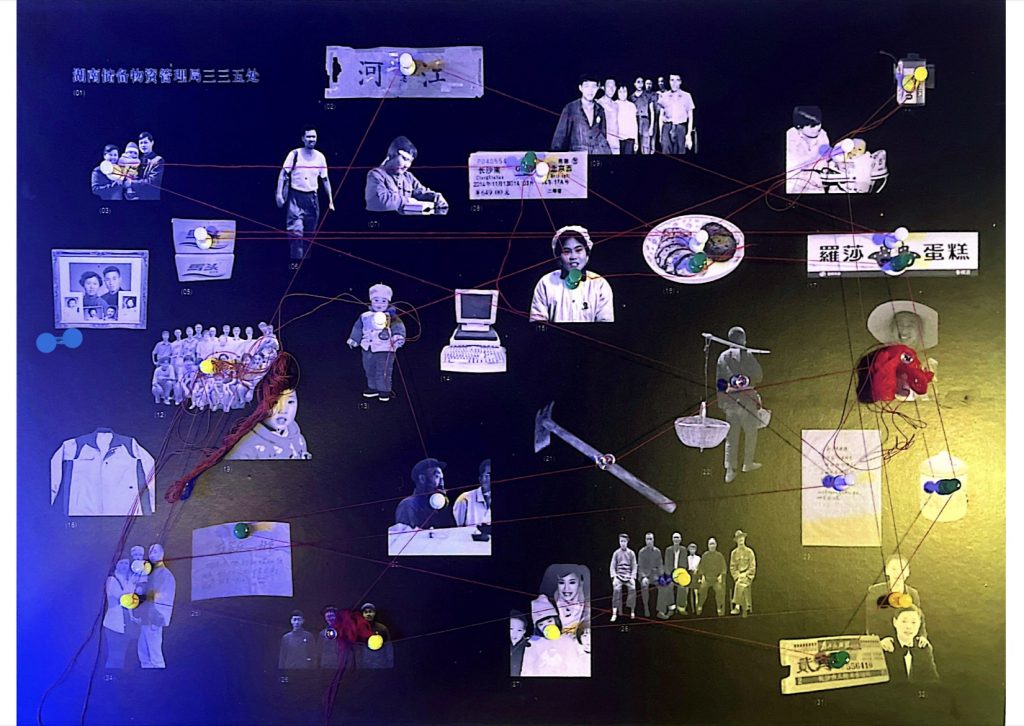
The white pins mark the majority of choices for 18-24 year olds, the yellow pins represent choices for 25-35 year olds, and the green pins mark choices for 35+ year olds.Transparent pins, on the other hand, are the result of my preconceptions at the beginning.
I used three red sewing threads for the entanglement to express a visual experience of the flow of lineage.
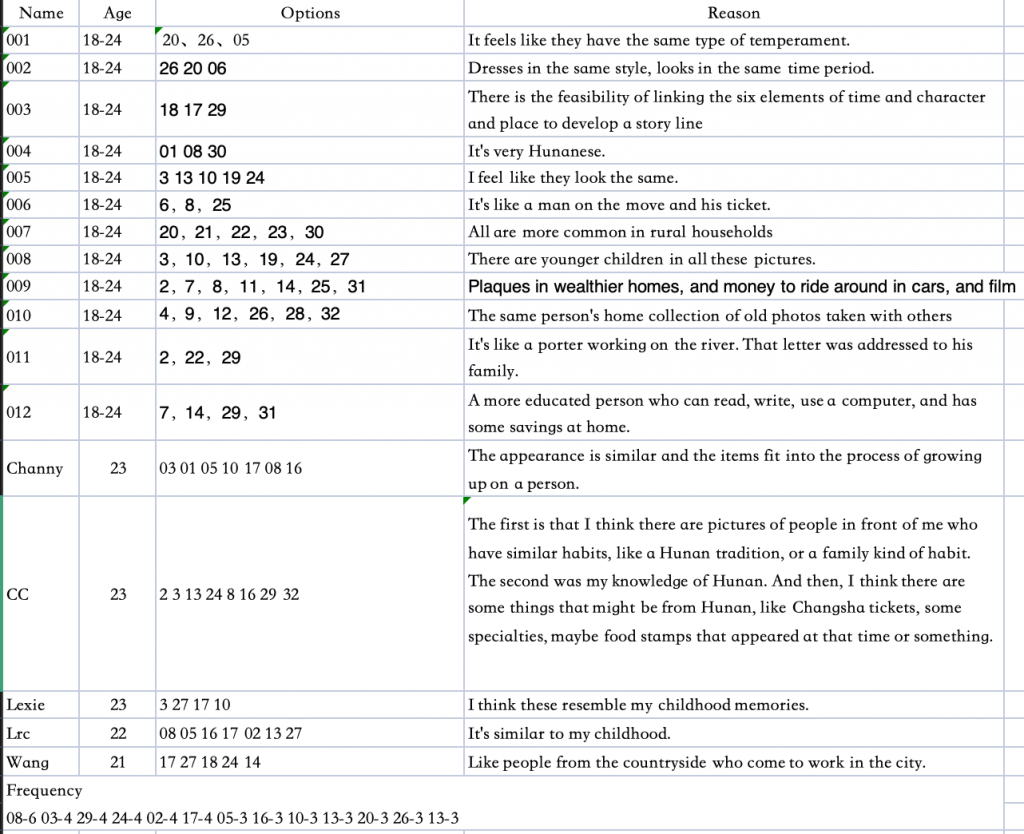
2.1. Interview Data
18-24:
25-35:
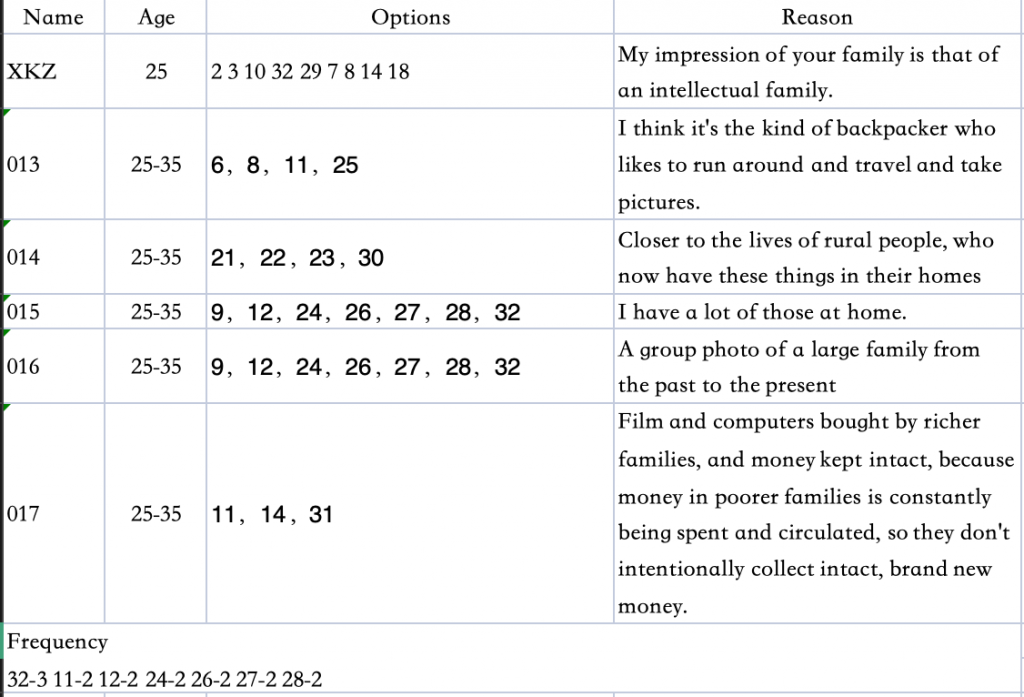
35+:
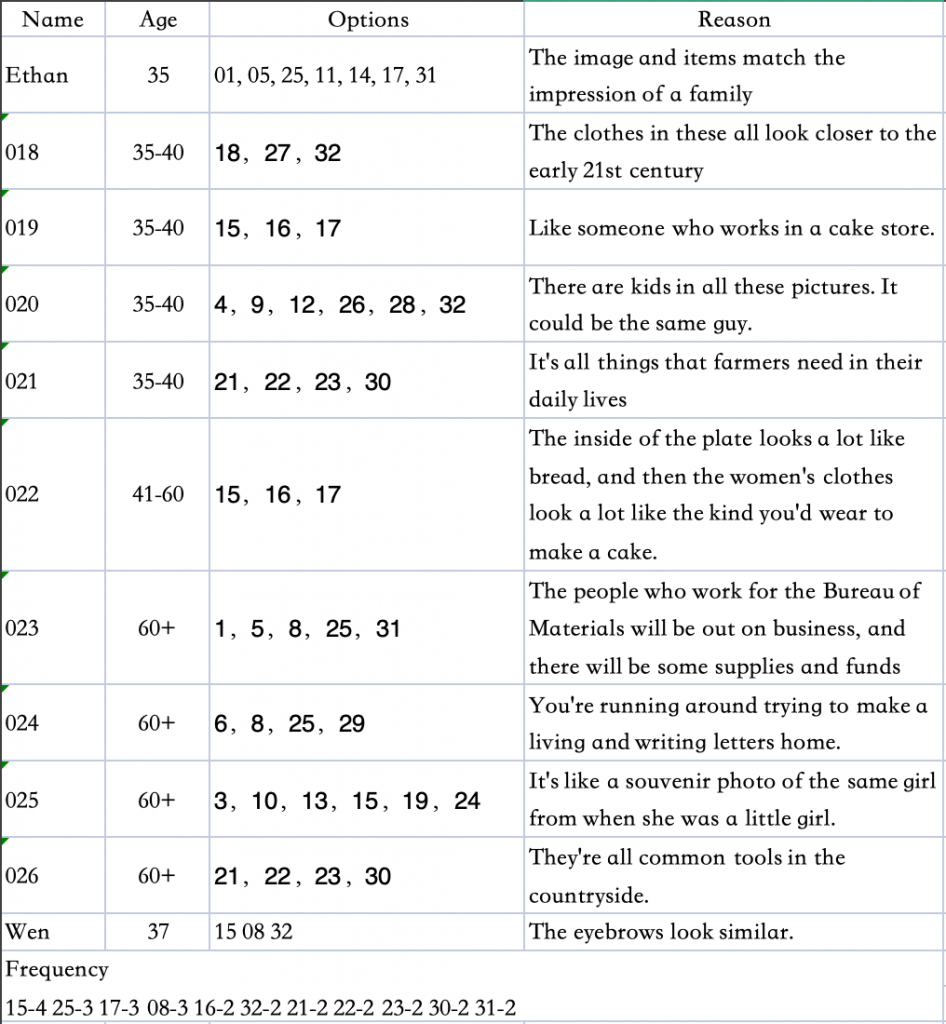
2.2. Analyze of Data:
Based on the analysis of the data, it can be seen that: the 18-24 year olds make their choices mainly based on their own childhood memories or purely external vision, and that the choices are more narrative in nature. A complete narrative can be pieced together between objects; 25-35 year olds choose according to regional, occupational or family characteristics. For example, XKZ chooses for the reason: I think it is an intellectual family; the 35+ age group is more concerned with the sense of the times and they focus on choosing elements that are visually of the same era.
In follow-up conversations with respondents, it becomes clear that the 18-24 year olds, all born after 2000 and mostly only children, will care more about their own feelings and family connections. Therefore, they choose to use their own memories as the blueprint. 25-35 year olds were born in 1990-2000, their parents’ generation just experienced the development of China’s economy, and they are strongly obsessed with their own regional affiliation, family affiliation, and professional affiliation, even to the point of confusion. The parents of people over 35 years old were almost all in the period of change after the founding of the new China, and the characteristics of the times are the most important part of their memories. In the final analysis, all three groups of samples’ identification with family symbols comes from their own childhood memories, and it is only because they are in different eras that creates a difference in their identification with symbols. This may be the fundamental source of the intergenerational generation gap.
3.1. Help with second intervention:
Regarding the second intervention, I am going to conduct it in the form of a workshop. I will invite respondents who participated in the first intervention with their parents or children, as well as people who would like to participate in the workshop with their parents or children. I will ask them to work on clay or felt crafts on the theme of my memories of my family, in isolation from each other. It can be a figurative object or an abstract expression. Me. At the same time, I will communicate with them with the intervention of a counsellor and ask them about the impact of family on them. This In this case, I will explore in more detail and on a personal level the differences and influences between family generations on family identity.
Leave a Reply