
This time, I tried a two-player match and played four rounds.
Below is participant feedback:
1.The game mechanics are a bit complex; it took me until the third round to grasp the rules.
2.Simulated existence allows one to experience the daily balancing act of fulfilling professional duties while maintaining existing relationships and appropriately forming new ones.
3.The character’s energy levels and relationship bonuses seem somewhat idealized; real life might not be quite like that.
5.The game does a poor job of helping players discover a balance between social interactions and self-care in daily life, yet it offers no solutions.
6.The competitive nature among players is quite low. Could we incorporate elements like in Werewolf or Monopoly where players can interfere with each other?
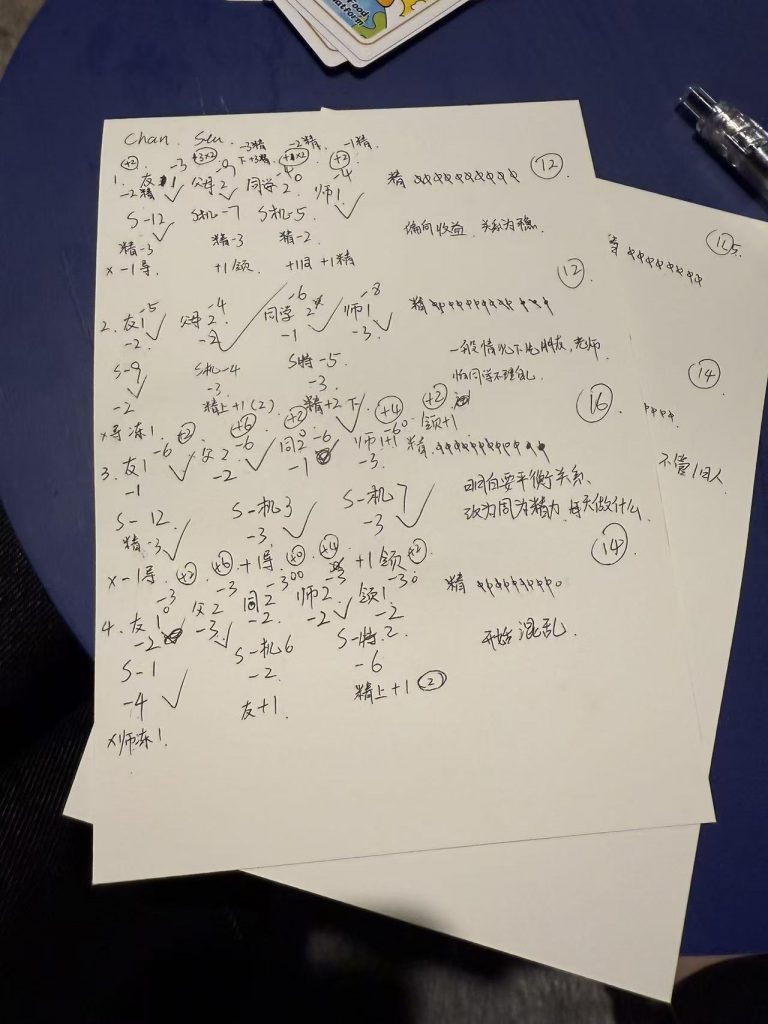

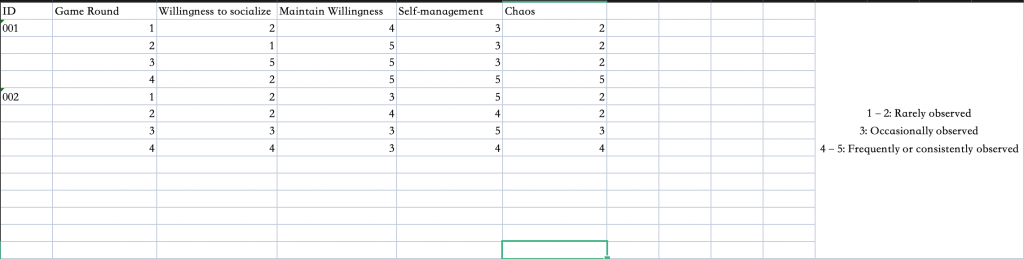

Following this test, improvements in social willingness, social discernment, and social management skills will be observed. During gameplay, participants will pay attention to task descriptions (e.g., parents falling ill or friends needing help) and complete them even when requiring higher action points, basing their in-game actions on their real-life behaviors.
The game’s competitive nature only manifests when players compare scores after completing their actions each turn. There is no direct interaction between players. This is an area that needs improvement. Perhaps incorporating mechanics similar to Werewolf or Monopoly could be considered.
Therefore, although the game achieved my intended purpose, the feedback indicates that it still requires simplifying its mechanics and enhancing its entertainment value and economic systems.
Leave a Reply