1.1.Abstract
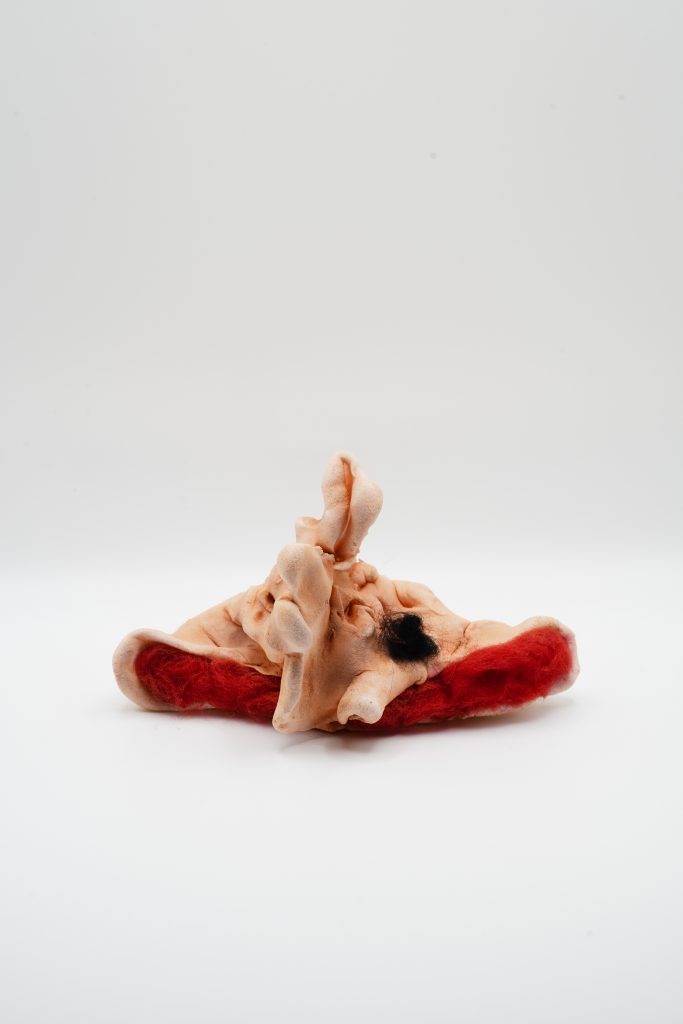
A total of five interviews were conducted during this workshop, resulting in the creation of approximately 15 sculptures.
The five groups of people had different backgrounds and different views on family, and each encountered these sensitive issues: parental divorce, homosexuality, son preference, mixed-race children, and family oppression. Among these, family oppression is a problem that almost everyone encounters. They believe that their parents (especially their fathers) oppress them in terms of their life, career, interests, love, etc., preventing them from choosing the lifestyle they want.
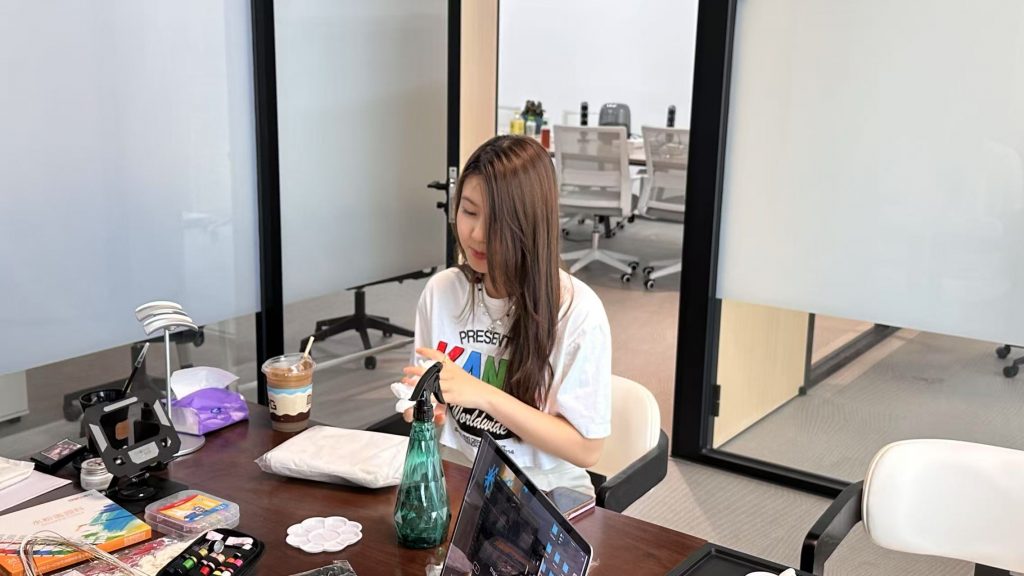
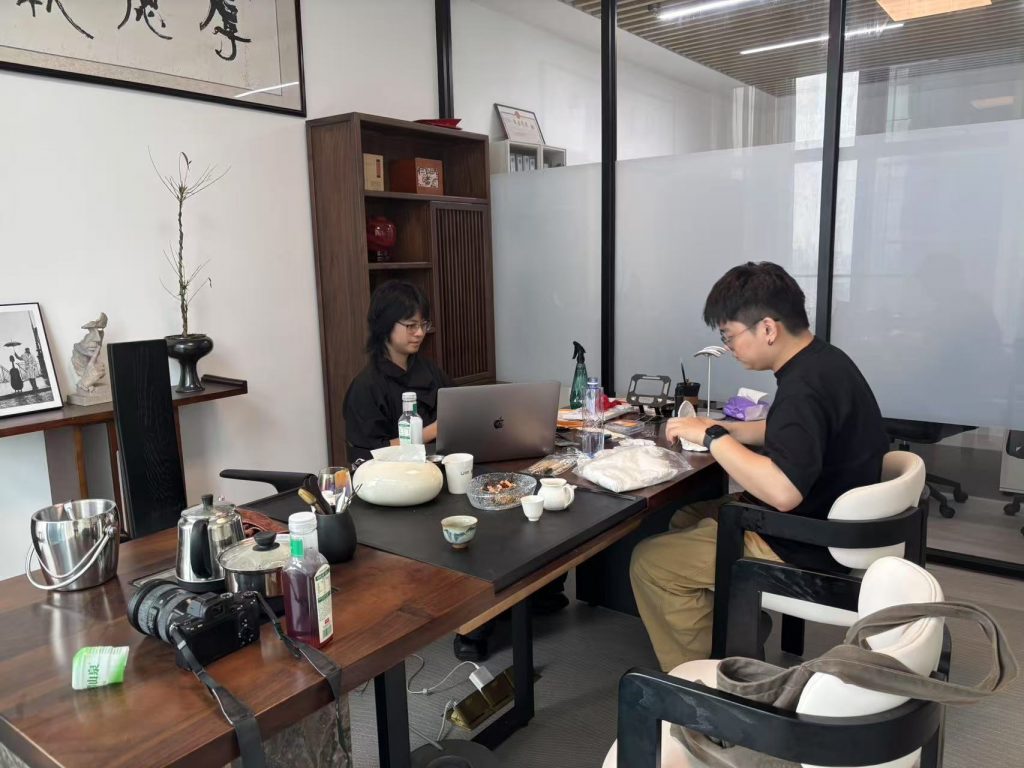
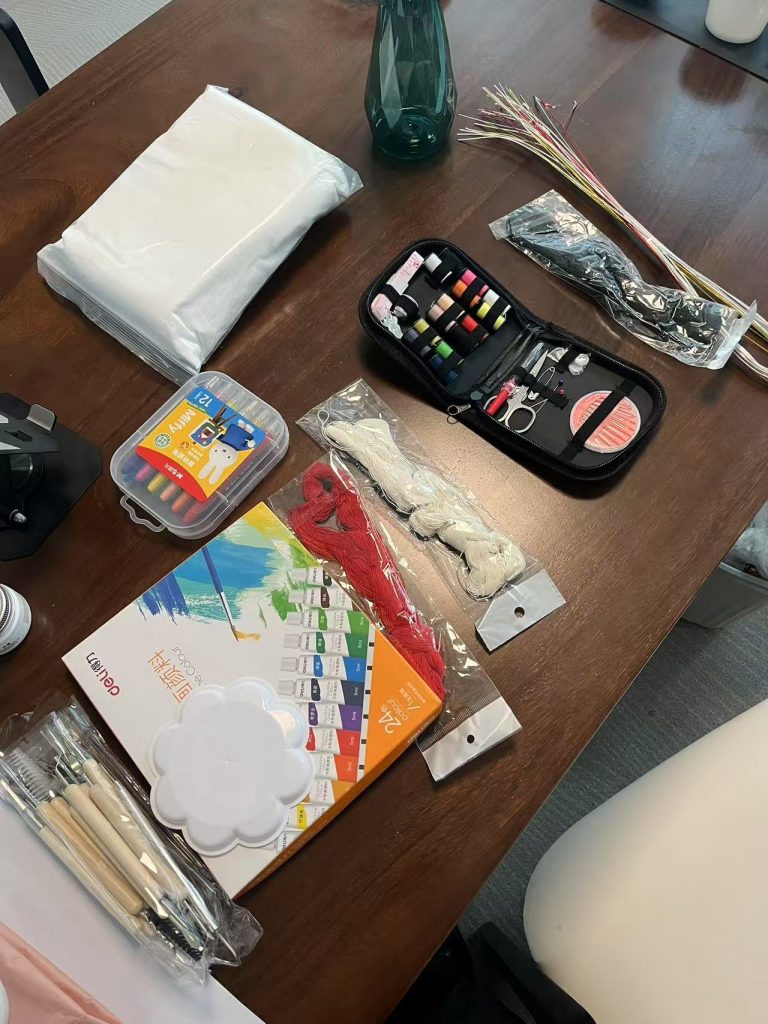
The sculptures were mainly made from ultra-light clay, with steel wire, rope, paper, and paint as additional materials. Participants chose different materials based on their mood and impressions of their families.
1. 2. Work Analysis
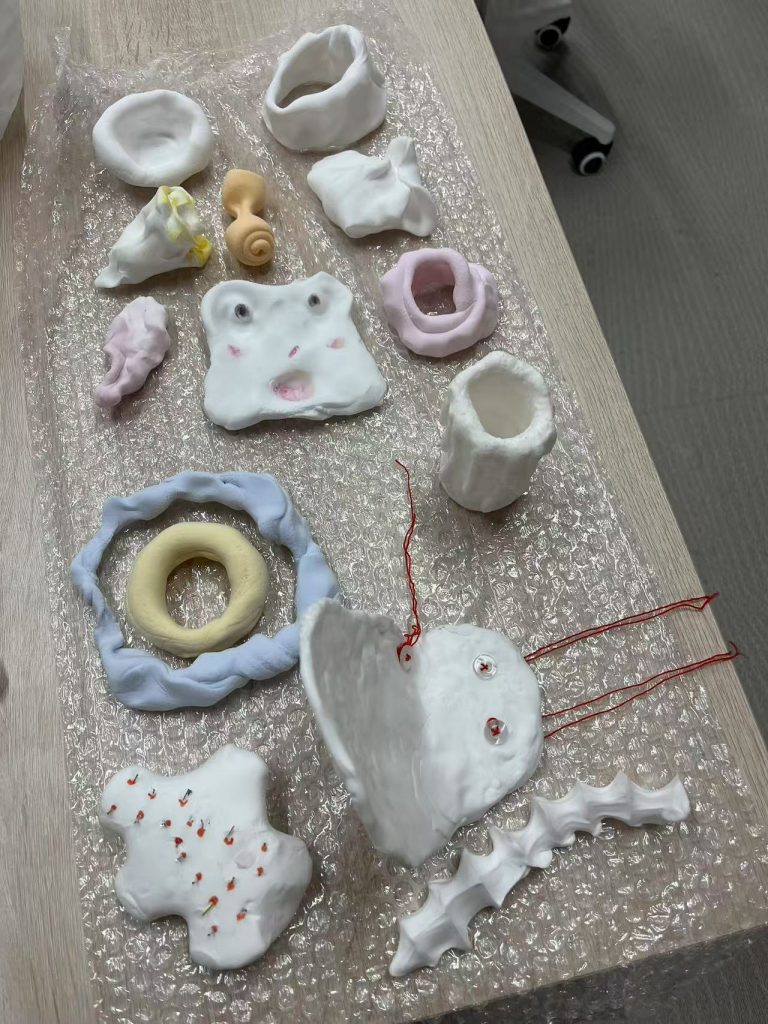
This is a collection of works by two participants. When asked about the most familiar family scene, Kelsey mentioned the window of her rented room in Shanghai, which she saw as a symbol of her ability to escape her parents’ control. 49 mentioned the family dinner table during Chinese New Year, which was a place where many relatives put pressure on
When asked about her ideal family, Kelsey believes it is one where parents treat gender and age equally. She recalls a scene from her childhood where she made bread with her mother, which inspired her to create many sculpture pieces resembling desserts. 49, on the other hand, believes there is no such thing as an ideal family. If there were, it would be one where family members could communicate with him without ulterior motives or emotional baggage. Therefore, his works feature red threads (which he explains as a symbol of familial bonds, though he despises the concept) and figures with their backs pierced by barbed wire (he admits he enjoys piercings, and after analysis by a therapist, this was interpreted as a sense of powerlessness toward his family environment).
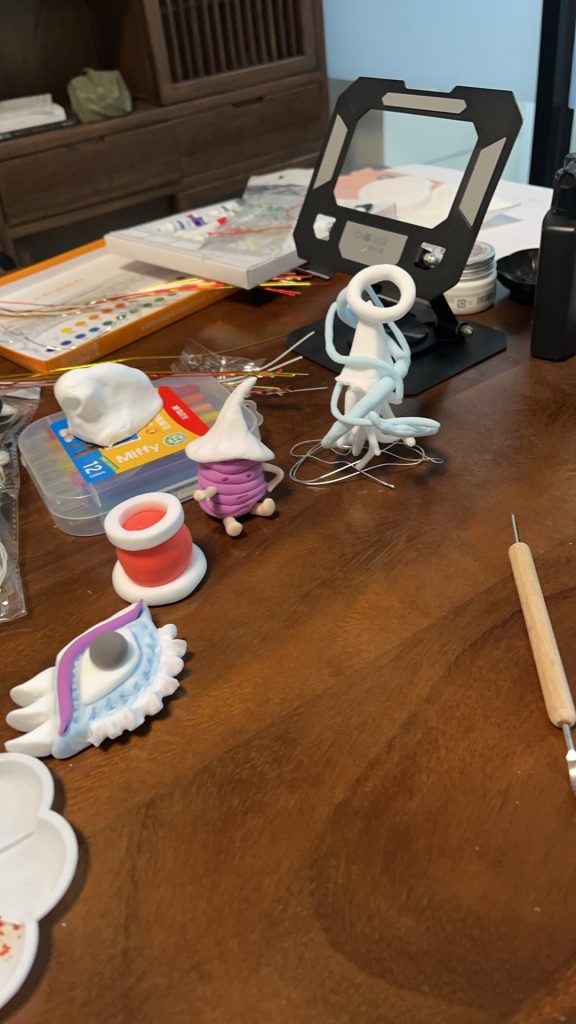
Audrey is of mixed Chinese and British heritage. She was born in China but raised in the UK. During our conversation, explaining the concept of family in the Chinese context took up a significant amount of time. Compared to family, she feels that her sense of cultural and ethnic identity is lacking. She believes that an ideal family is one where members can communicate and interact with genuine sincerity. However, upon further reflection, she acknowledges that she still does not have an ideal family in mind, but rather an ideal scenario: living with her partner in a duplex apartment with large floor-to-ceiling windows. Her works are quite random, and she explains that this is related to the many plush toys in her home; when discussing family, the first thing that comes to mind are these toys.
Her impression of a family is a bookshelf, as her parents were often separated, and their means of communication were books and letters.
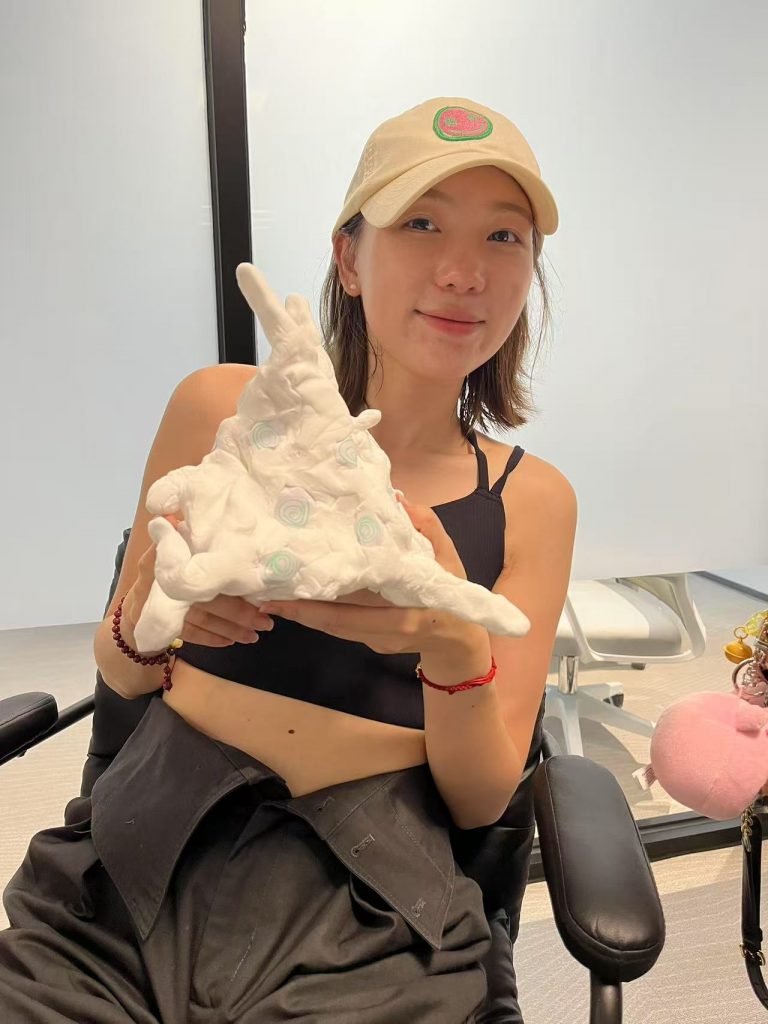
Tokki was the first participant, and she was often influenced by her emotions during the creative process. When she talked about her childhood, she repeatedly and forcefully kneaded the clay in her hands, leaving many fingerprints on the final piece. When she talked about her ideal family, perhaps because her successful career had made her financially independent, she was very relaxed. As she stuck notes on the wall, she said, ‘The ideal family is one where I am alone, no longer expected or burdened by anyone else.’
Her impression objects and scenes are the dining table and the watch, because that was the first time she lost her watch and was not scolded by her parents.
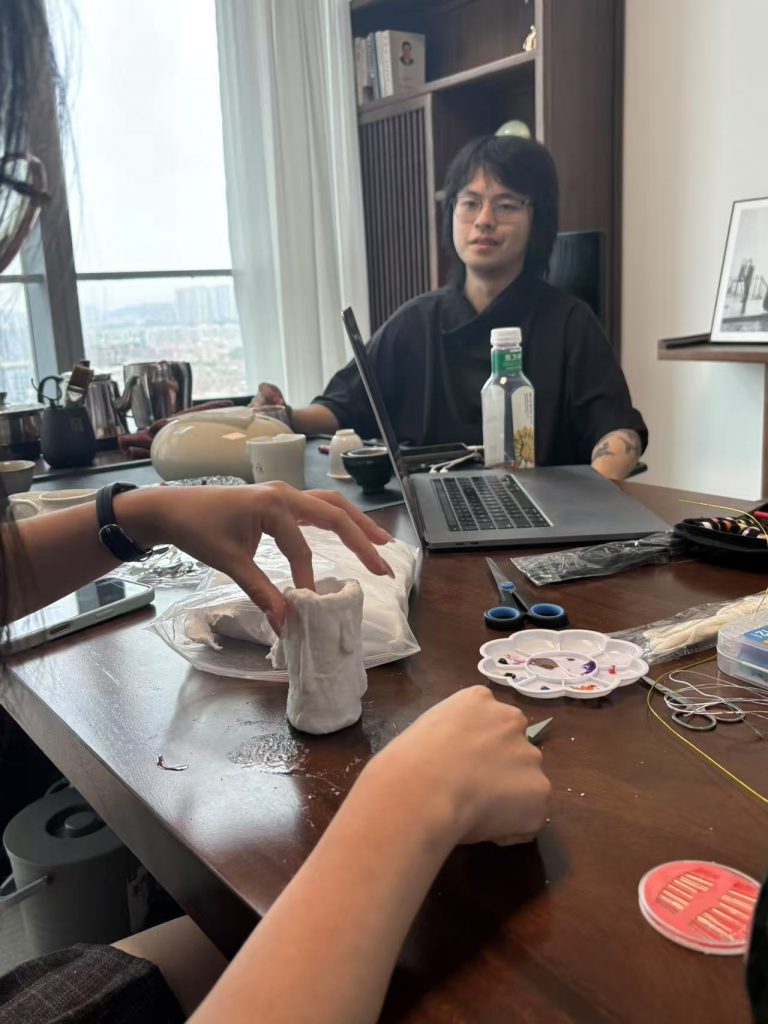
This participant, Niaoniao, graduated from the Guangzhou Academy of Fine Arts. She explained that she was not completely influenced by her emotions when creating sculptures: ‘There are no problems in my family, and years of art practice have made me instinctively create things.’
Her impression is of a bed, because she slept with her parents until fifth grade due to her intense separation anxiety.
1.3.Summary
Almost all participants mentioned communication and oppression, which may be a common feature of East Asian families. In the subsequent third intervention, I will reinforce this symbol, perhaps in the form of a fictional family history or exhibition. At the same time, I will remember the memorable scenes mentioned by each person, process and restore them, to reinforce the meaning of each sculpture.
Leave a Reply