1.1. Questionnaire
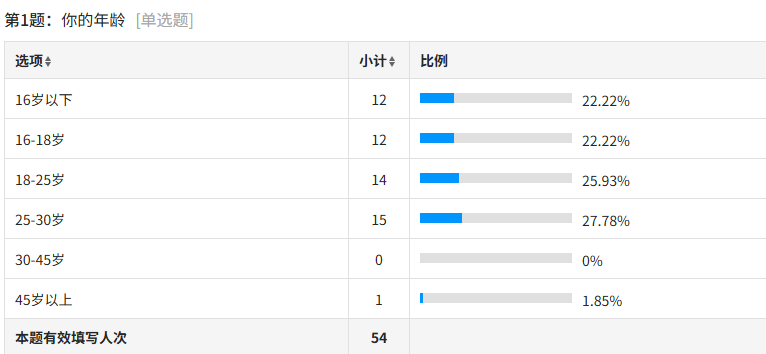
Your Age
Under 16:12
16-18Yrs:12
18-25Yrs:14
25-30Yrs:15
30-45Yrs:0
Above45:1
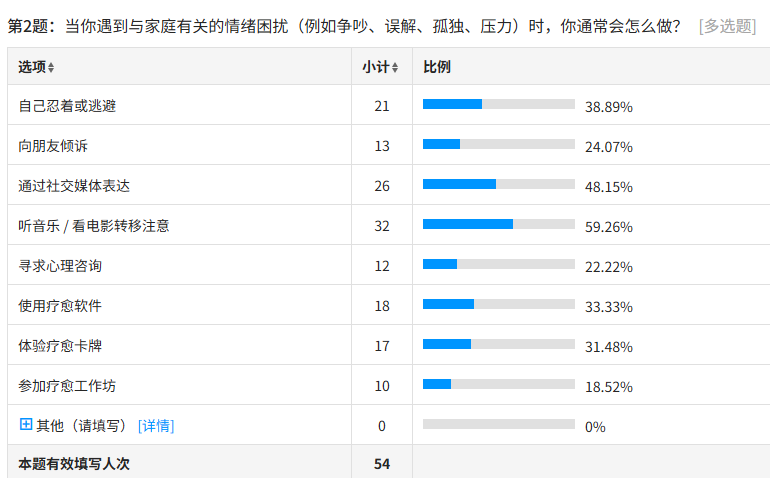
When you encounter emotional distress related to family matters (such as arguments, misunderstandings, loneliness, or stress), what do you usually do?
Endure it alone or avoid it:21
Talk to friends:13
Expressing through social media:26
Listen to music / Watch movies to distract yourself:32
Seeking psychological counseling:12
Use healing software:18
Healing Experience Cards:17
Attend a healing workshop:10
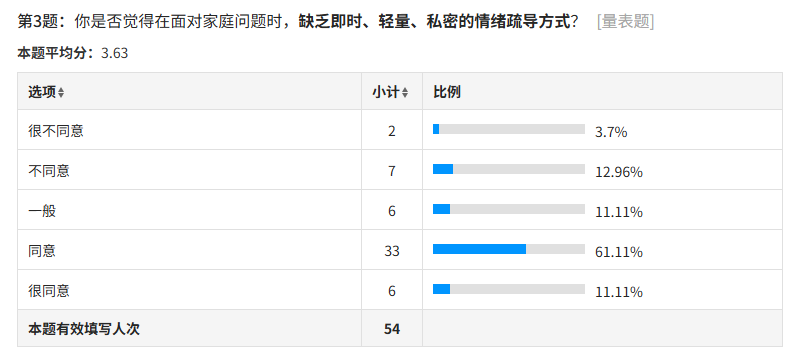
Do you feel like you lack an immediate, low-commitment, and private way to process your emotions when facing family issues?
Strongly disagree – Strongly agree
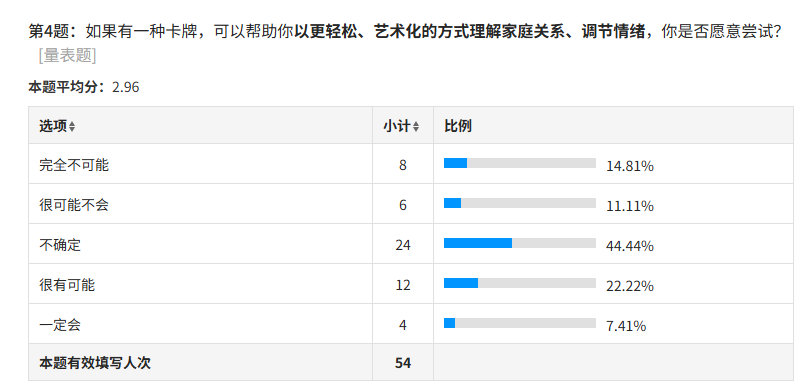
If there were a deck of cards that could help you understand family relationships and regulate your emotions in a more relaxed, artistic way, would you be willing to give it a try?
Not at all – Definitely
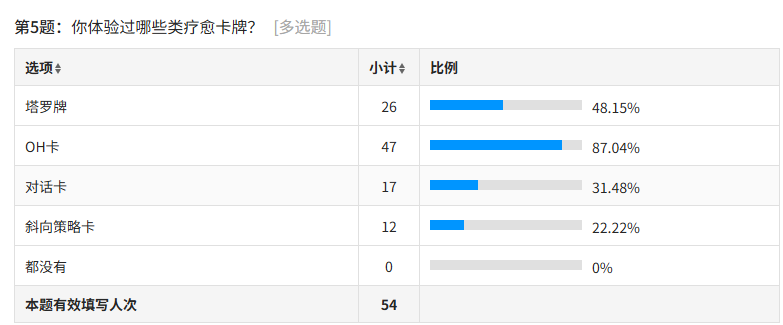
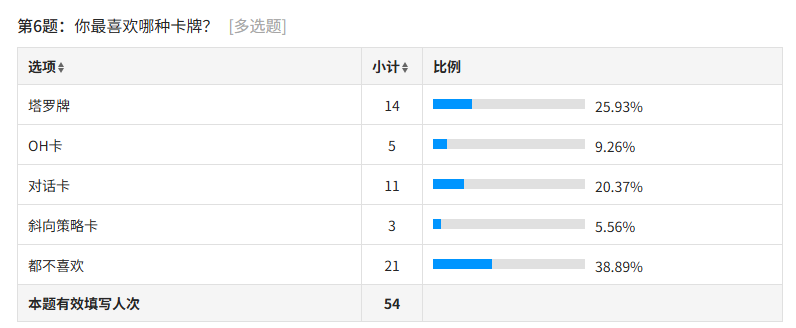
Which card game have you tried? / Which card game do you like best?
Tarot Cards
OH Cards
Dialogue Cards
Oblique Strategy
None of the above
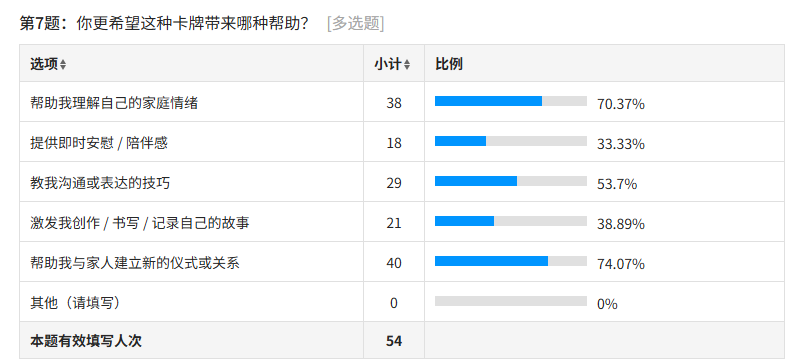
What do you hope the cards can help you with?
Help me understand my family dynamics
Provide immediate comfort / companionship
Teach me communication or expression skills
Inspire me to create / write / document my own story
Assist me in establishing new rituals or relationships with family members
Other (please specify)
In what scenarios do you think these cards are most suitable?
When used alone (self-reflection)
With friends
At family gatherings
In psychological/art workshops
In psychological institutions/therapy settings
In online applications (apps/websites)
Other (please specify)
Which style do you prefer for the cards?
Gentle Healing (Soft colors + Poetic language)
Mystical Symbolism (Surreal imagery + Philosophical questions)
Game Interaction (Quest cards, Challenge cards)
Minimalist Reflection (Black and white + Keywords)
Hybrid
If the cards are divided into two sets:
“Inner Journey” — helping you explore your connection to your family and discover your strengths;
“Family Bonding” — helping you improve relationships with family members and create shared rituals.
Which set appeals to you more?
Mainly the Inner Journey set
Mainly the Family Bonding set
Want both sets
Not interested in either
How would you like the cards to guide you?
Instructions with illustrations (step-by-step guide)
Accompanied by voice prompts or videos
Automatically generate tasks within mini-programs/webpages
Free draw with no fixed rules
Other (please specify)
1.2. Summary
This survey collected 54 valid responses, with respondents predominantly aged 16–30 (approximately 98%), aligning closely with the project’s target demographic (young adults). Most respondents reported experiencing misunderstandings, arguments, loneliness, and pressure within family relationships. When facing distress, 21% of the 149 responses indicated turning to music or films to distract themselves, 17% expressed their feelings through social media, and only 8% sought psychological counseling. This reveals a widespread lack of accessible, non-medical emotional coping mechanisms among young people. Only 37% expressed willingness to use psychological therapy or related healing tools to alleviate emotional distress.
61.11% of respondents believe there is currently a lack of instant, private emotional support tools, validating the social demand for “therapeutic cards” as a service medium. However, only about 30% expressed willingness to “try artistic approaches for managing family relationships,” while 44.44% remained undecided. This indicates that designs must align more closely with users’ daily habits, avoiding excessive psychological barriers or overly “therapeutic” formats. It suggests that while the public currently seeks coping methods, they have yet to develop the habit of seeking emotional healing, preferring self-relief instead.
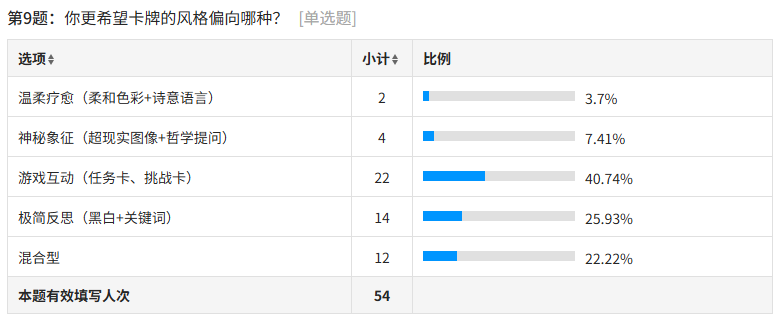
Regarding card experience, 87.04% have tried OH cards, but only 9.26% liked them, while 38.89% selected “didn’t like any.” This indicates that traditional psychological card formats tend to be rigid, lacking emotional immersion and visual appeal. Conversely, Question 9 reveals that 40.74% desire cards with a “game-like interactive style,” followed by “minimalist reflection” (25.93%), showing younger demographics prefer lightweight, actionable, and challenging interactive approaches.
Regarding desired functions, 74.07% hope cards help families establish new ritualistic bonds, 70.37% seek to understand their own emotions, and 53.7% aim to learn communication skills. This reveals their focus extends beyond emotional healing to “rebuilding relationships” and “enhancing communication abilities.”
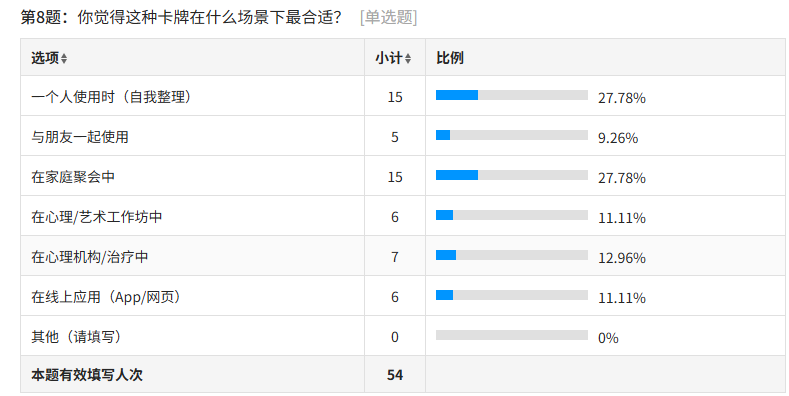
Regarding usage scenarios, personal solitude (27.78%) and family gatherings (27.78%) tied as the most common settings, indicating that the cards should balance privacy with social potential.
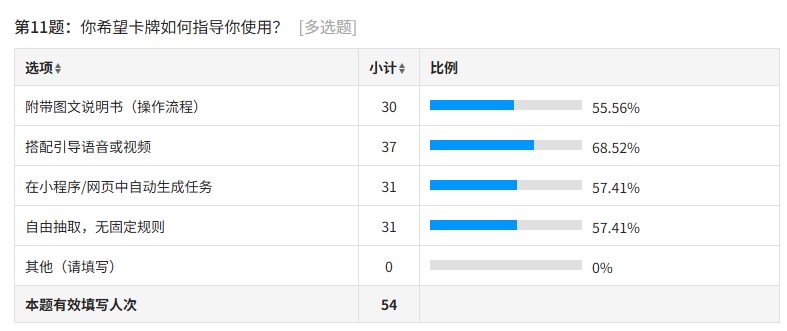
Regarding design guidance, Question 11 reveals: 68.52% prefer voice or video guidance, 55.56% want instruction manuals, 57.41% desire automatic task generation on webpages/mini-programs, and another 57.41% support free selection.
This indicates users desire both lightweight guidance structures and flexible, autonomous usage options. Aligning with this trend, consider adopting a “free card draw + formulaic questioning” approach: it preserves a sense of ritual while reducing learning costs.
In summary, future card designs should shift from “therapeutic” to “interactive emotional support tools”:
Visual Language: Transition from soft aesthetics to a hybrid style blending symbolism and task-oriented design;
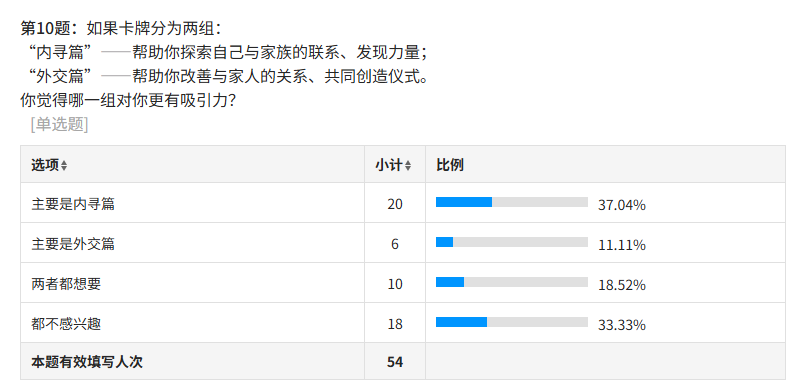
Structural Strategy: Prioritize designing the “Inner Journey” to guide self-exploration, while appropriately enriching the “Outer Journey” with effective methods to rebuild relationships;
Media Extension: Develop online guidance portals (voice, tasks, logging systems);
User Experience: Balance companionship for solitary users with shared experiences for group users.
This survey reveals that young people are not averse to emotional exploration but seek accessible, engaging, and connective methods. Future cards that integrate “companionship + interactivity + narrative” will truly deliver dual social and psychological value.
Leave a Reply