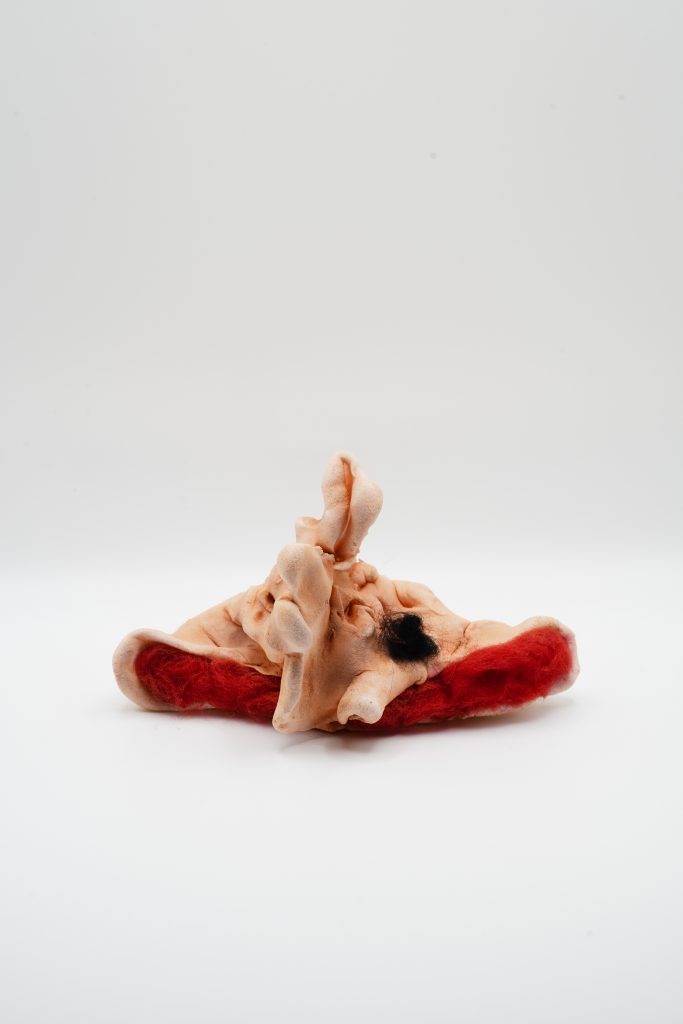
Author: Qizhi Che
-
Questionnaire of card design
1.1. Questionnaire Your Age Under 16:12 16-18Yrs:12 18-25Yrs:14 25-30Yrs:15 30-45Yrs:0 Above45:1 When you encounter emotional distress related to family matters (such as arguments, misunderstandings, loneliness, or stress), what do you usually do? Endure it alone or avoid it:21 Talk to friends:13 Expressing through social media:26 Listen to music / Watch movies to distract yourself:32 Seeking…
-
Card Design Concepts
1.1. Abstract Reflecting on the workshops in Unit Three, most participants remarked that this provided an excellent space for expressing their thoughts. From this, I discerned that this format is viable. However, might there be a more accessible, self-directed approach? One that allows participants to access resources independently at any time. This card set, combining…
-
How to design service-oriented tools to provide emotional support for young people facing family issues
1.1. Source of the idea During my tutorial discussions with my tutor David, I arrived at this idea. In the tutorial, I observed that workshops suffer from shortcomings such as limited practical effectiveness, inflexible scheduling, and an inability to provide immediate solutions. Compared to proven therapeutic approaches like art therapy, workshops function more as private…
-
Reading and Reference Summary
Bourriaud, N. (2002) Relational Aesthetics. Dijon: Les Presses du Réel. 2025.07.12 Abstract:Relational aesthetics emphasizes that artistic creation fosters human interaction, transforming art into a generative field for social relations. Association with the project:The idea that “art can repair or reconstruct interpersonal relationships” and the concept of “the audience as co-creator” led me to consider a…
-
Third Intervention: On the Design of Fictional Family Histories and Exhibitions
1.1. Project Background This project originated from reflections on the lack of family identity among contemporary youth and the underlying socio-cultural structures. With the acceleration of globalization, urbanization, and digitalization, unmarried and childless young adults aged 18-24 are gradually distancing themselves from traditional family structures, creating complex tensions between familial influence and personal choices. Through…
-
The Expectations of the Perfect Family: Archives, Fiction, and Audience Participation in Artistic Practice
1.1. Abstract The family is often romanticised as a ‘safe haven,’ but in reality, many psychological issues stem from the original family. So, does the ‘perfect family’ truly exist?This artistic practice stems from my personal experiences and curiosity about family dynamics. I will use workshops, sculpture, and media to construct a fictional family history. 2.1.…
-
Summary of the first workshop
1.1.Abstract A total of five interviews were conducted during this workshop, resulting in the creation of approximately 15 sculptures. The five groups of people had different backgrounds and different views on family, and each encountered these sensitive issues: parental divorce, homosexuality, son preference, mixed-race children, and family oppression. Among these, family oppression is a problem…
-
Preparation for the second intervention
Perfect Family Project Participant Authorisation Form Dear Participant: Thank you for participating in the Perfect Family project initiated by artist Qizhi Che. This project aims to explore the emotional connection between young people and their families through material art and interviews. The artworks you create in the workshop and the audio or text materials you…
-
Plan of the second intervention
1.1. Programme Outline The second intervention is a series of workshops. The workshops have two part: podcast and art creating. Podcast part: Paticipaters are invited to record their own perceptions of family, the impact it has had on them, and what they think the perfect family would be. Create a sculpture of the ‘perfect family’…